<img height="1" width="1" style="display:none" src="https://www.facebook.com/tr?id=1268168780589904&amp;ev=PageView&amp;noscript=1">
G2-AI-Agent_Hero-1 G2-BBR-2026_1080x1350
Crossing the

AgenticChasm

2026 AI Agents Report

Last updated: October 14, 2026

G2-AI-Agent_Hero-2

No software innovation has received more hype in recent years than AI agents. The promises have been epic, but in 2026, the AI agent market faces a bumpy road as it seeks to transform work across the enterprise.

Visionaries looking to leapfrog competitors invested heavily in agents last year, funding pilots with discretionary budgets and “AI war chests.” Yet these early adopters represent only a fraction of the total addressable market that vendors promised investors they could capture.

Business process owners still need assurance that agents will deliver meaningful productivity gains without introducing risk or chaos into their workflows. Together with IT, they make up the largest group of buyers that vendors must win over. Both are wired for proof, not promises.

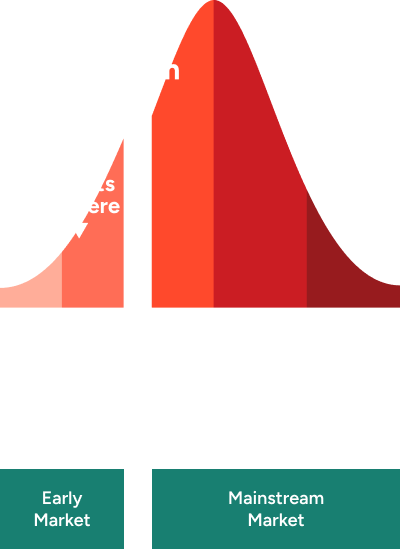
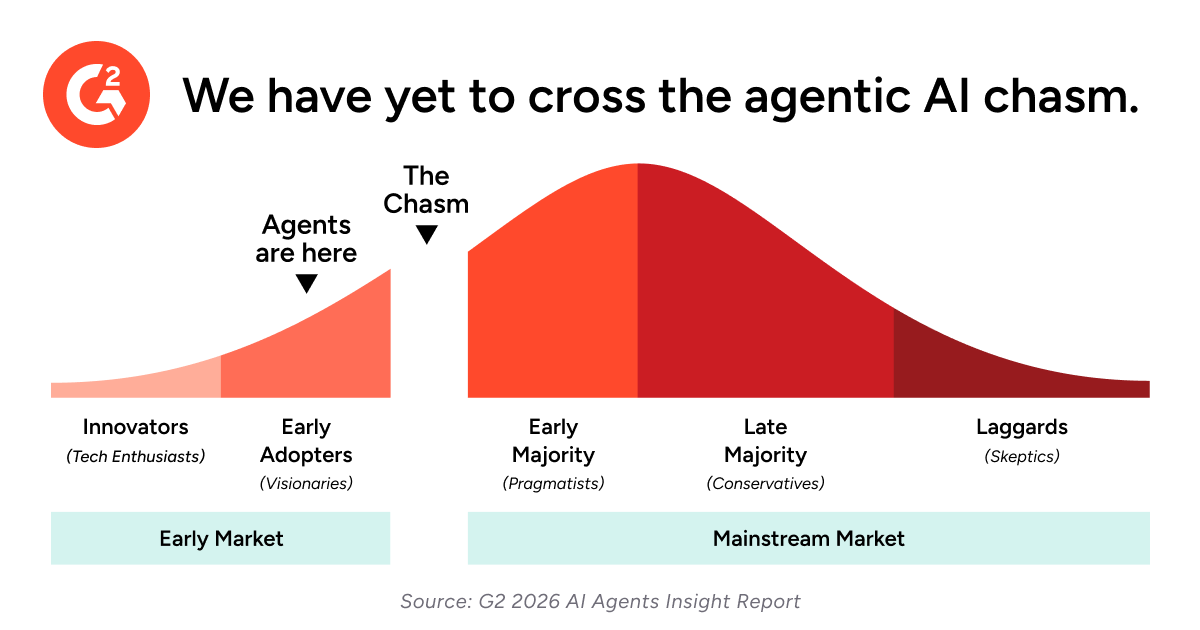
In his groundbreaking book, “Crossing the Chasm,” high-tech marketing strategist Geoffrey Moore identified the challenge now facing the AI agent market: “The point of greatest peril in the development of a high-tech market lies in making the transition from an early market dominated by a few visionary customers to a mainstream market dominated by a large block of customers who are predominantly pragmatists in orientation.”

Agents are here The Chasm Innovators (Tech Enthusiasts) Early Adopters (Visionaries) Early Majority (Pragmatists) Late Majority (Conservatives) Laggards (Skeptics) Early Market Mainstream Market
  Download


Think about the uphill battle Salesforce faced when it launched. Visionaries bought the promise of browser-based enterprise software along with lower costs and easy access to data from anywhere in the world.

But mainstream buyers needed to feel secure about its reliability, security, configuration, integrations, implementation support, and an ecosystem of complementary applications. They also wanted references from companies like theirs. Salesforce crossed the chasm by building that infrastructure, constantly improving the product’s reliability and giving pragmatists proof that the model could work at scale.


Agent vendors face the same challenge today, despite early success convincing a wide range of customers to invest in and pilot their products. When we asked B2B software buyers, 86% of respondents said they purchased AI agent software or services in the past year, and 66% now have agents in limited or scaled production.


Yet customers still do not trust agents enough to grant them high levels of autonomy. Reliability remains a concern, and 36% of companies reported agent-related security incidents in the past year.

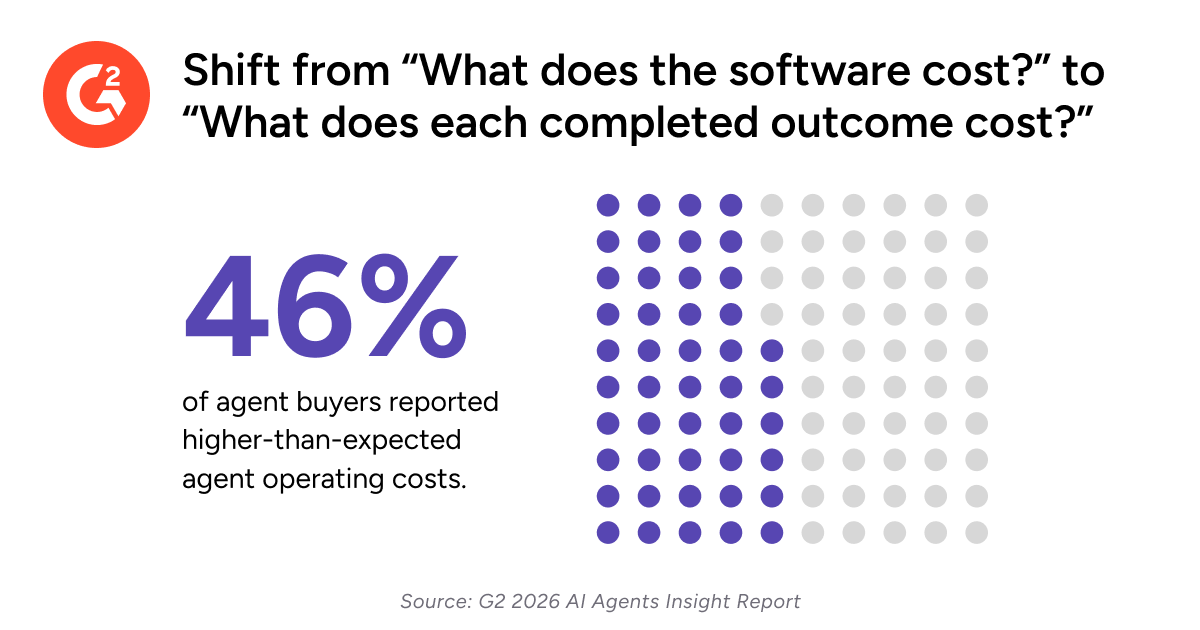
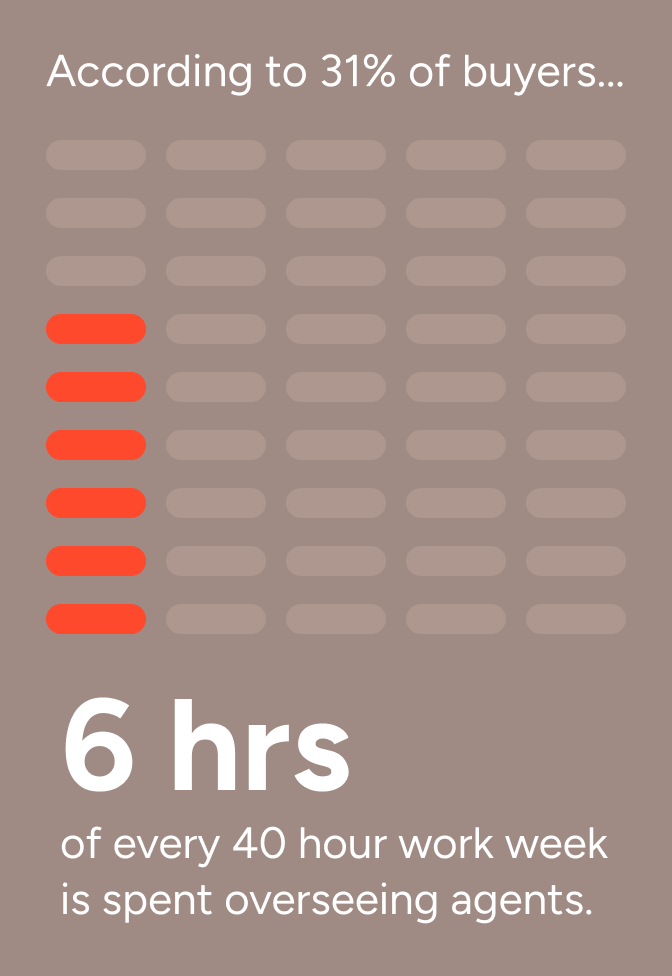
The Trust Gap we identified last year did not disappear as agents moved into production. It moved inside the workflow and became a Distrust Tax — the cost of operating agents under constrained trust. 31% of B2B organizations say they spend 6 or more hours each week overseeing agents, and 45% say oversight and rework consume more than a quarter of their expected productivity gains. Another 46% report agents having higher-than-expected operating costs.

Crossing the chasm now depends on lowering the Distrust Tax through continuous product improvement and enterprise-grade control planes that help customers manage risk. Pragmatists need answers to practical questions: Will agents work inside their systems? Who will own and monitor them? How will costs be controlled? Will the gains hold up after oversight and rework? This report shows what it will take to give mainstream users the proof and control they need to adopt agents at scale.

Make no mistake — the age of agents is upon us. The market is booming, and agents will ultimately revolutionize our systems of work. But buckle up. Crossing the chasm will be a bumpy ride.


Tim Sanders
Chief Innovation Officer, G2
ChatGPT Image Sep 25, 2026, 10_31_31 AM 2

KEY FINDINGS

1

Agent investments are moving from pilots into production.

Companies are putting agents into the workflows that have real business impact, particularly where performance directly affects speed, quality, and cost. AI agent purchasing by B2B software buyers climbed by 25% year over year, and 66% of organizations now have agents in limited or scaled production. Nearly half of organizations with completed pilots say the majority of their pilots have advanced to full production. The next hurdle is giving agents more consequential work without adding enough supervision to erase the gains.

2

The Trust Gap has created a Distrust Tax.

Agents can create meaningful speed and cost gains, but companies often give part of that value back through reviews, corrections, exception handling, and oversight. 31% of B2B buyers say employees spend 6 or more hours each week bot-sitting (overseeing agent work). 45% say time spent overseeing and correcting agent mistakes consumes more than a quarter of the productivity gains they expected, and 46% report higher-than-expected operating costs. The longstanding habit, 'trust but verify,' comes at a steep cost.

3

Shadow Agents are the new Shadow IT.

As agent fleets grow, inventory, identity, visibility, and accountability are lagging. 38% of organizations with agents in production operate more than 100 agents, yet almost half (47%) still use informal or decentralized management models. With agents operating at scale, companies need better visibility into which agents their employees are running, the jobs they are doing, and who answers for their work.

4

Agents are disrupting SaaS.

Agents are reshaping the way buyers value SaaS. Seat-based pricing fits poorly with the work that agents perform continuously, and only 9% of buyers consider per-user or per-seat pricing fairest. Meanwhile, 72% say a strong ecosystem of connectors, actions, skills, or marketplace offerings is very important or a must-have for agent adoption. SaaS isn’t going anywhere, but by 2030, 56% of agent buyers expect agents to orchestrate work across their SaaS stack.

5

Buyers hold AI agents to a higher standard of proof than traditional software.

Agents are capable, and they want autonomy. However, buyers want the vendors behind them to show their work before they take them off a leash. 52% require human quality review before production, and 77% re-evaluate agent performance at least monthly. As agents take on higher-stakes work, that evidence must hold up in the real world.

image 4-1 Frame 27236
G2-AI-Agent_Section-1-3
G2-AI-Agent_Section-1-2

AGENT INVESTMENTS INVEST- MENTS

ARE MOVING
 FROM PILOTS
INTO PRODUCTION

The agent conversation is becoming less about buying into the idea of AI agents and much more about what companies are willing to put into production. This is evident, as AI agent adoption by B2B software buyers climbed from 69% to 86% year over year. Agents are handling more recurring work that companies already measure, which makes the value easier to see, but the cost of getting that work wrong is harder to ignore.

The current state
of agent spending

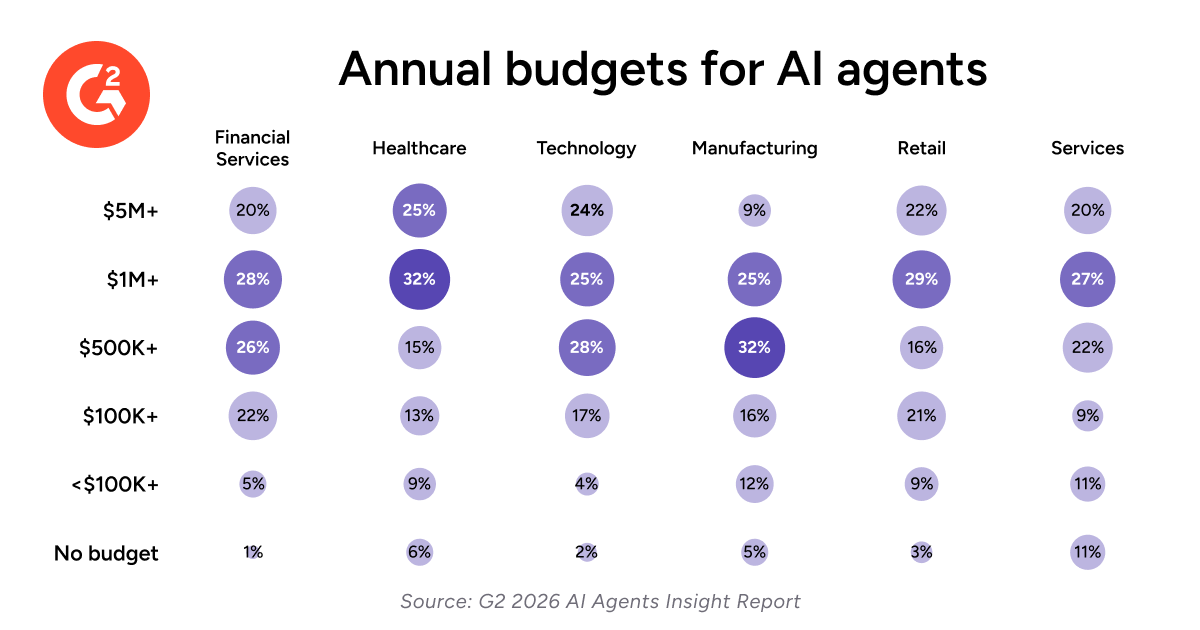
AI agent investment is moving beyond experimentation and into scale. Technology and retail saw the biggest year-over-year jump in $5 million-plus budgets, while healthcare remains the spending leader.


Bubble chart showing annual AI agent budgets across financial services, healthcare, technology, manufacturing, retail, and services. Healthcare has the highest shares at $5 million or more (25%) and $1 million or more (32%); manufacturing has the largest share at $500,000 or more (32%).

  Download


Financial services offers the clearest sign of institutionalization, with virtually every organization now reporting a dedicated budget. Manufacturing stands apart, concentrating spending below $1 million.

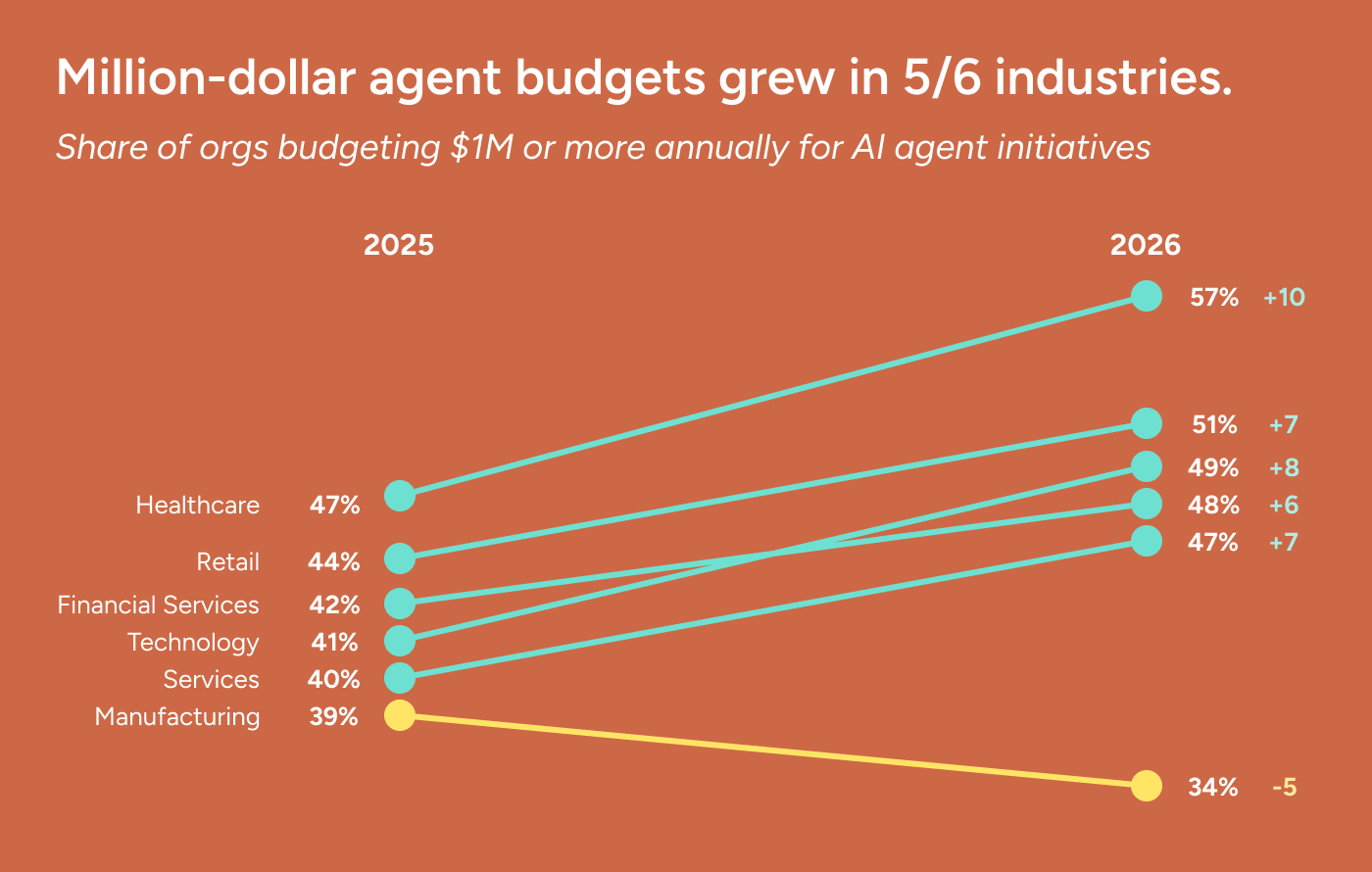
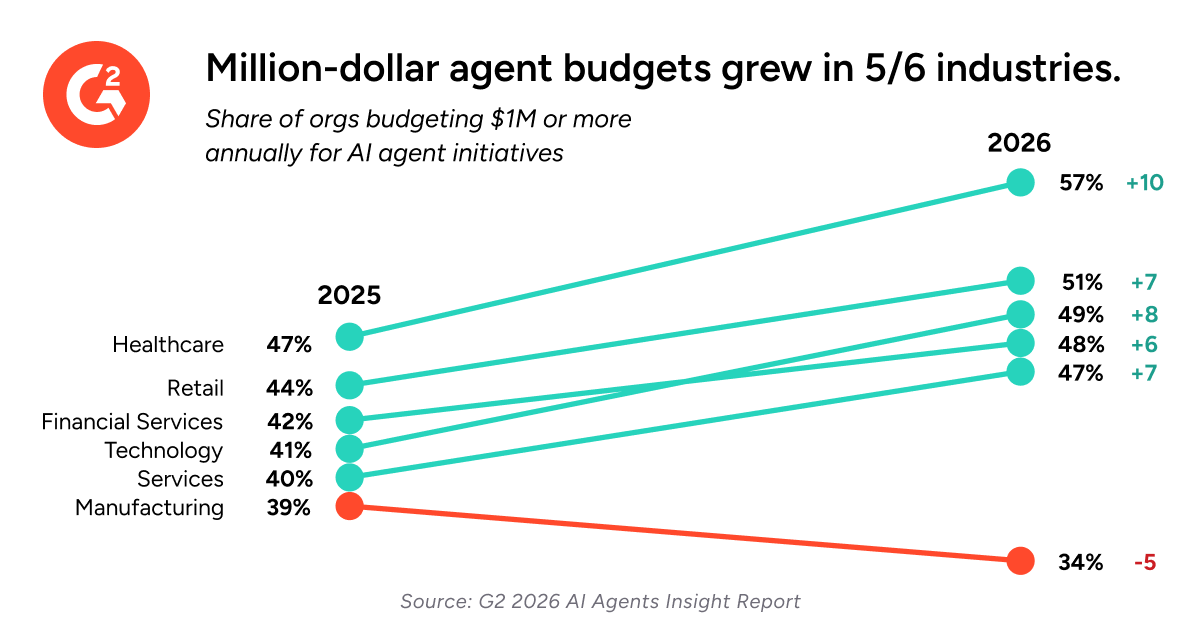
The rise of million-dollar budgets isn’t isolated to one industry. In five of the six industries we track, the share of companies with budgets of at least $1 million increased year over year. Healthcare leads, with 57% now spending at least $1 million, up 10 percentage points.

One thing is clear: AI agents are no longer being funded like side experiments. Across most industries, they are becoming a seven-figure line item.

Smaller initiatives are graduating into larger, more institutional programs. But bigger budgets do not mean agentic transformation has arrived.

Enterprise spending is outpacing enterprise readiness. Vendor revenue and large deployments validate the category. Yet adoption remains uneven, human oversight remains heavy, and implementation requires more hands-on work than buyers expected.

The market has proven that early adopters will invest heavily in agents. It has not yet been proven that mainstream buyers are ready to follow. Visionaries are expanding their commitments, while pragmatists still need evidence that agents can deliver repeatable outcomes without adding risk, cost, or chaos.

Agents are showing early signs of value

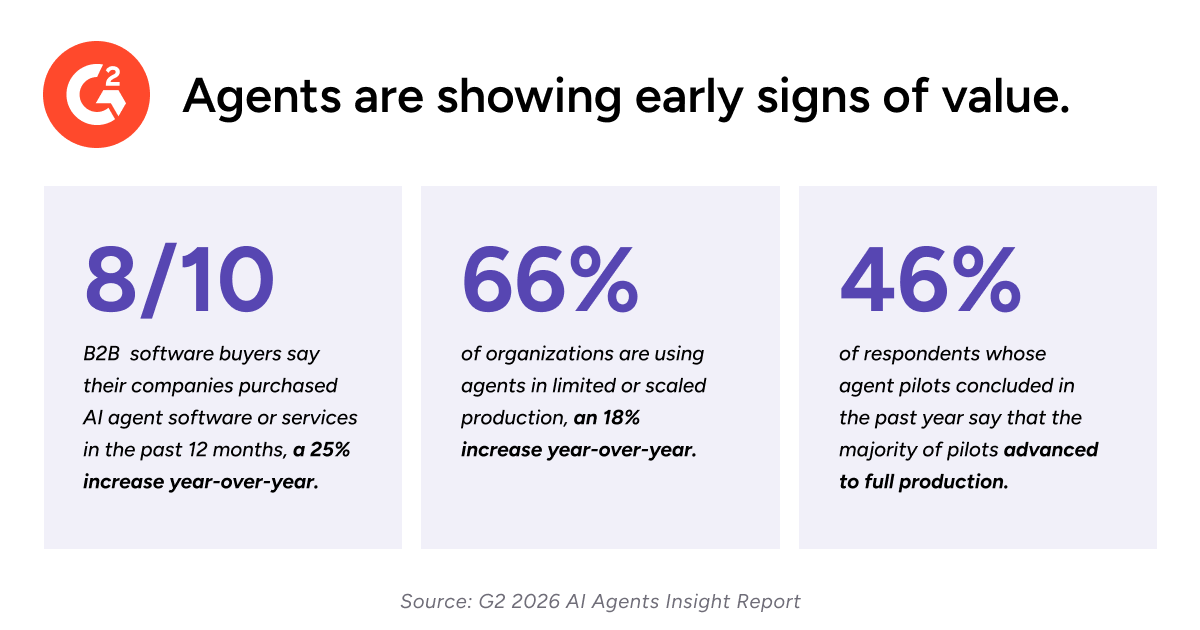
8 in 10 B2B software buyers we polled say their companies purchased AI agent software or services in the past 12 months, a 25% increase from our 2025 study. The number of organizations using agents in limited or scaled production also hit 66%, an 18% year-over-year increase. Among respondents whose agent pilots concluded in the past year, 46% say more than half of those pilots advanced to full production.

While agent usage is rising, the mainstream market will judge them by what happens after they hit deployment, and whether improvements are tangible and consistent enough to warrant more work. Many early adopters are already seeing that proof in production.

Among those running agents in mature, high-volume workflows, 4 out of 5 report cycle-time improvements of at least 11%, and nearly half report speed gains of at least 25%. This is emerging as a predictable level of speed gains, and it is the kind of repeatable result that can earn agents more work.

Let’s put that 11% into perspective. If a $1 billion company cut its 38-day order-to-cash cycle by 11%, it would collect cash 4.2 days sooner, releasing approximately $11.5 million from accounts receivable. That is working capital the company can use to fund growth, reduce debt, or strengthen liquidity.

8/10

B2B software buyers say their companies purchased AI agent software or services in the past 12 months, a 25% increase year-over-year.

66%

of organizations are using agents in limited or scaled production, an 18% increase year-over-year.

46%

of respondents whose agent pilots concluded in the past year say that the majority of pilots advanced to full production.

  Download

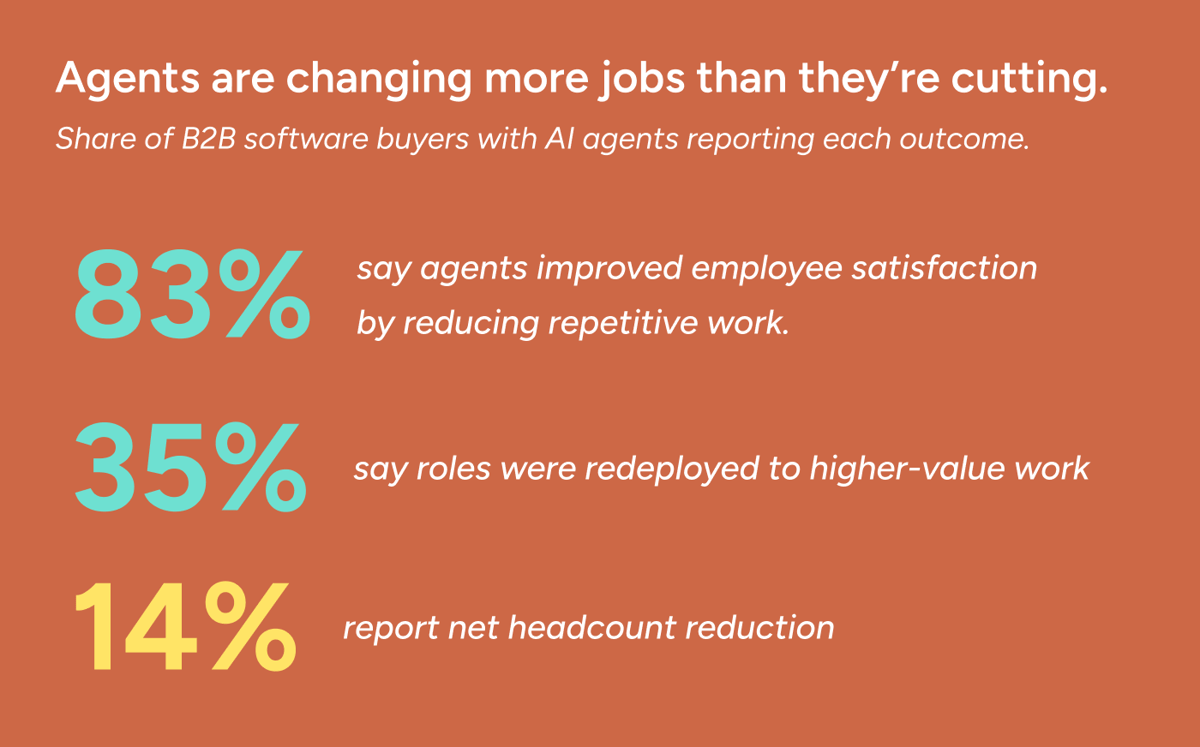
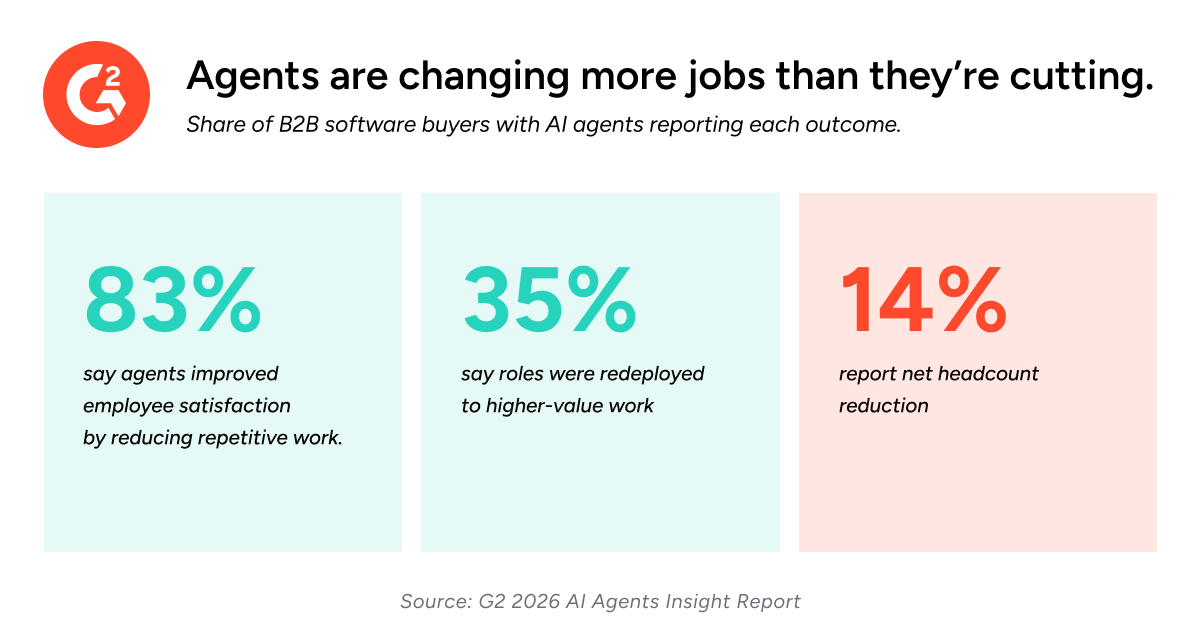
Some benefits are intangible as well. More than 8 in 10 (83%) respondents say agents have improved employee satisfaction by reducing repetitive work, and 35% report redeploying employees into higher-value roles. Just 14% report reducing net headcount as a result of deploying agents.

Clearly, the data points to job redesign more often than job elimination.

Agent use cases are defined by workflow

Companies are finding their next agent use case in work they already understand. Nearly half start with high-volume, repetitive processes. About one in three look first at whether an agent can connect with the systems already in place, while another third need data that is structured and accessible.

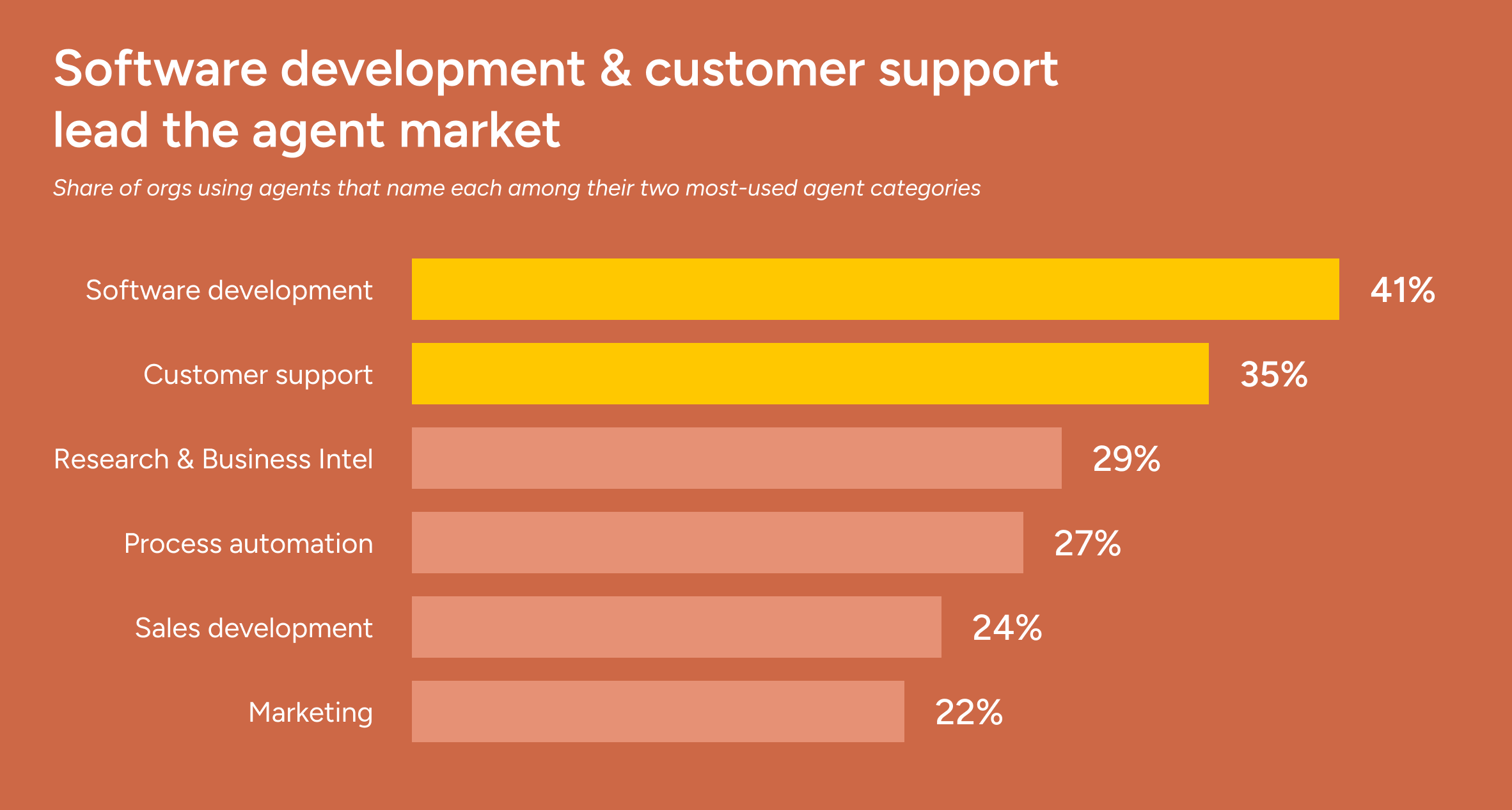
That logic is visible across the market. Software development and customer support remain the two most common agent use cases, but agents are also being applied across research, process automation, sales, and marketing. The point is less about finding a single killer use case than finding work with enough volume, structure, and measurable value to justify an agent.

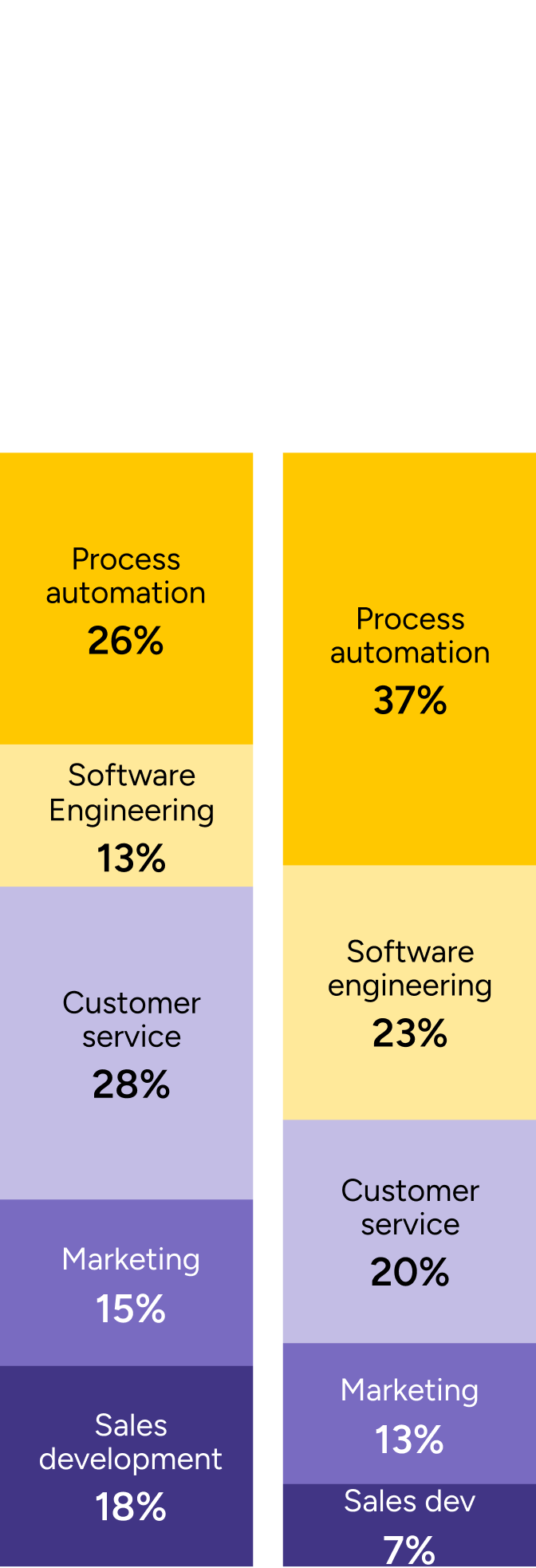
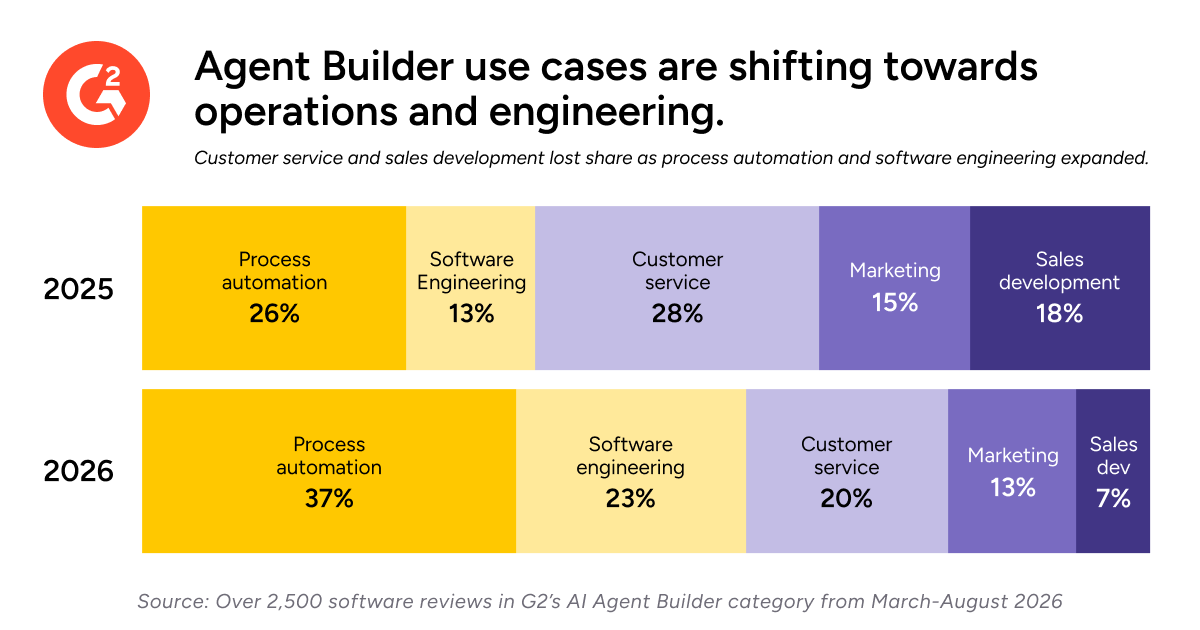
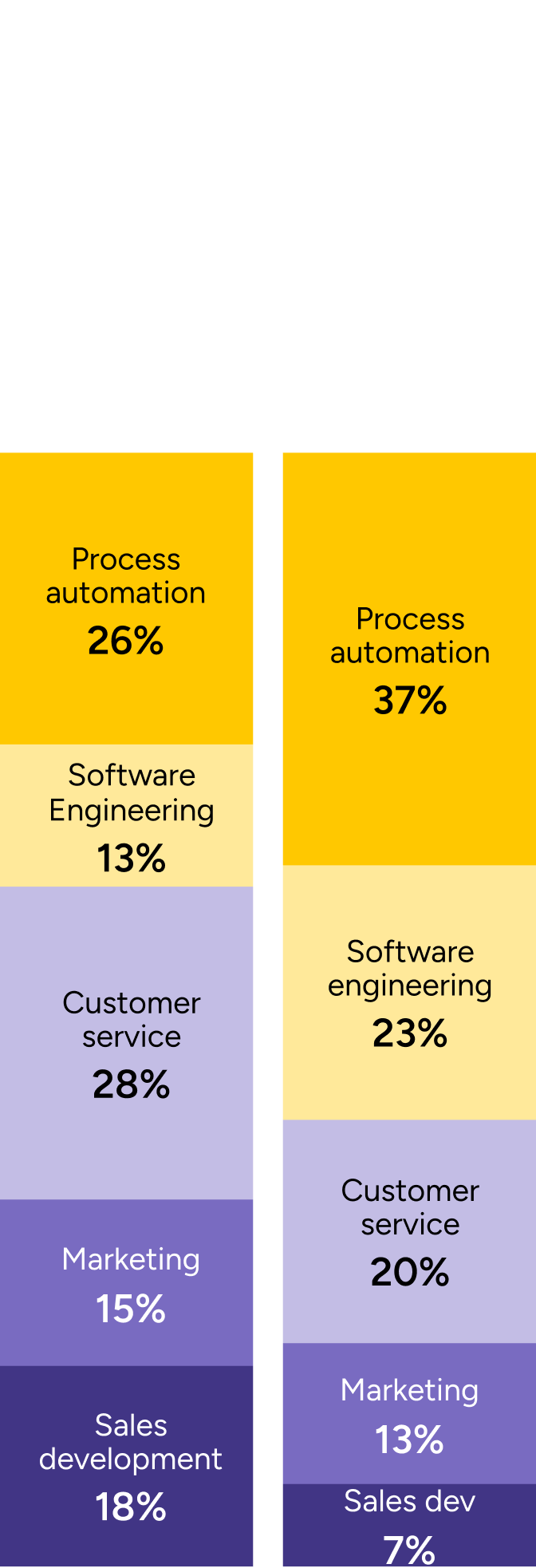
Review data from the Agent Builder category on G2 shows how one part of that market is changing. As general-purpose platforms have expanded beyond their earlier customer-service roots, software engineering use cases have risen 77% year over year, and process automation has grown 42%. Sales development use cases have more than halved over the same period.

The vendors that cross the chasm will be the ones that can show buyers how work changes after deployment, then use that proof to identify the next workflow worth automating.

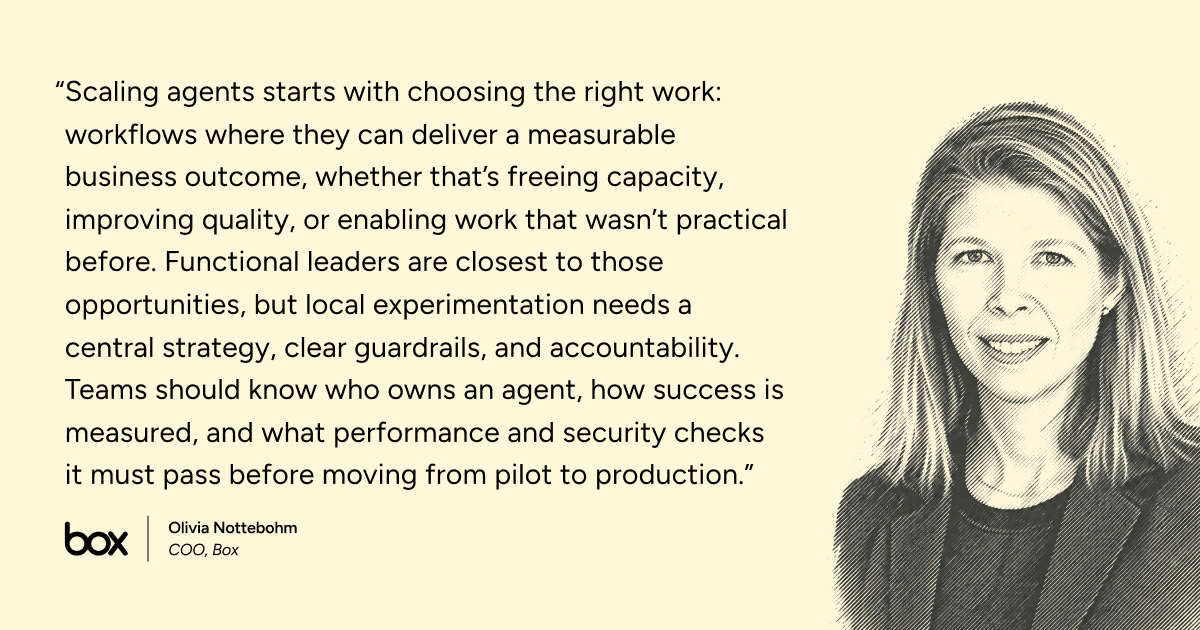
Scaling agents starts with choosing the right work: workflows where they can deliver a measurable business outcome, whether that’s freeing capacity, improving quality, or enabling work that wasn’t practical before. Functional leaders are closest to those opportunities, but local experimentation needs a central strategy, clear guardrails, and accountability. Teams should know who owns an agent, how success is measured, and what performance and security checks it must pass before moving from pilot to production.”


ChatGPT Image Oct 6, 2026, 09_01_55 AM 1
  Download

What this means for agent vendors:

Stop selling transformational results and sell the business case for repeatable operational gains. The 11% cycle-time example above illustrates what companies get wrong about selling agents. Pragmatists don’t need a 3x or 10x promise. To justify broader deployment, they need evidence that an agent can provide dependable, incremental improvements in established workflows that add up to a meaningful business result. The 11% cycle-time reduction illustrated above may not make a moonshot headline, but in the $1 billion order-to-cash example, it releases $11.5 million in working capital. That is the kind of tangible business result that gives pragmatists the confidence to justify broader deployment. Vendors should show the measurable improvement, what it means in the customer’s operating model, and where that same proof can be applied next.

Frame 27249
THE TRUST GAP
HAS CREATED A
DISTRUST  TAX

The hidden cost of bot-sitting

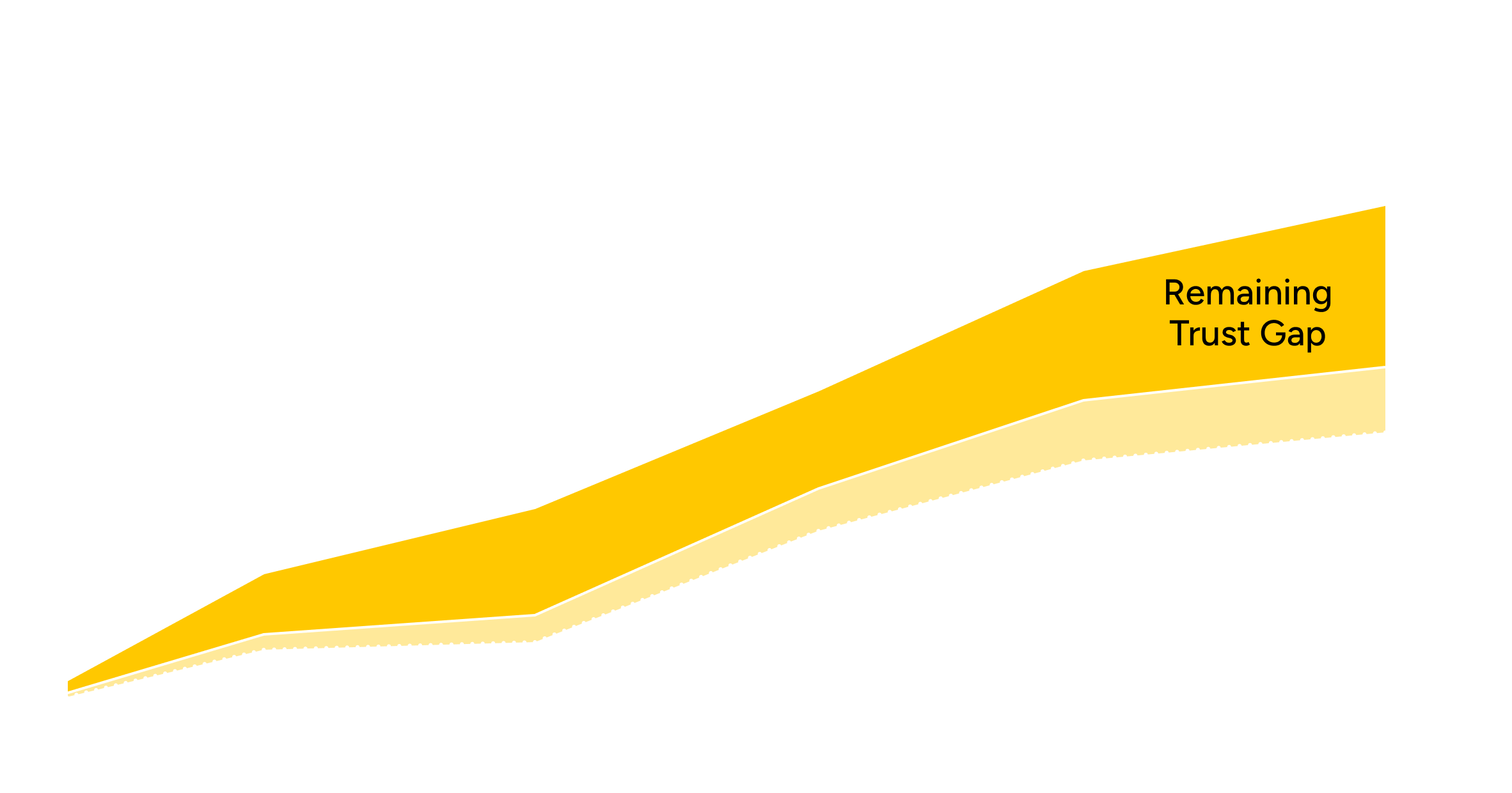
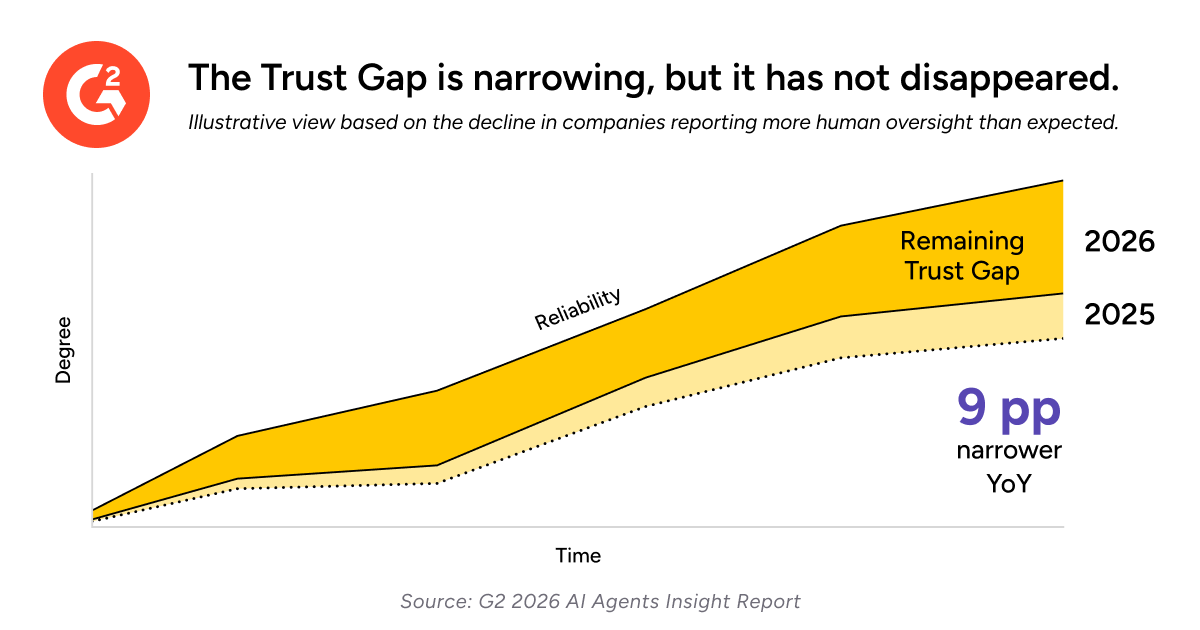
Last year’s AI Agent report introduced the concept of the Trust Gap — where companies invested in agents to act independently, only to find they needed more human oversight than expected. This year, that gap has begun to narrow, and the hesitation has moved from readiness to economics.


Illustrative area chart showing the AI Agent Trust Gap narrowing by 9 percentage points year over year, while a remaining gap persists in 2026. The chart labels reliability as a factor over time and compares the 2025 and 2026 gap levels.

  Download


Agents independently consume tokens, models, APIs, data, and other services. Consequently, 46% of agent buyers we surveyed reported higher-than-expected agent operating costs. The new question is not simply, “What does the software cost?” Buyers also need to know: “What does each completed outcome cost after compute, oversight, exceptions, and rework?”

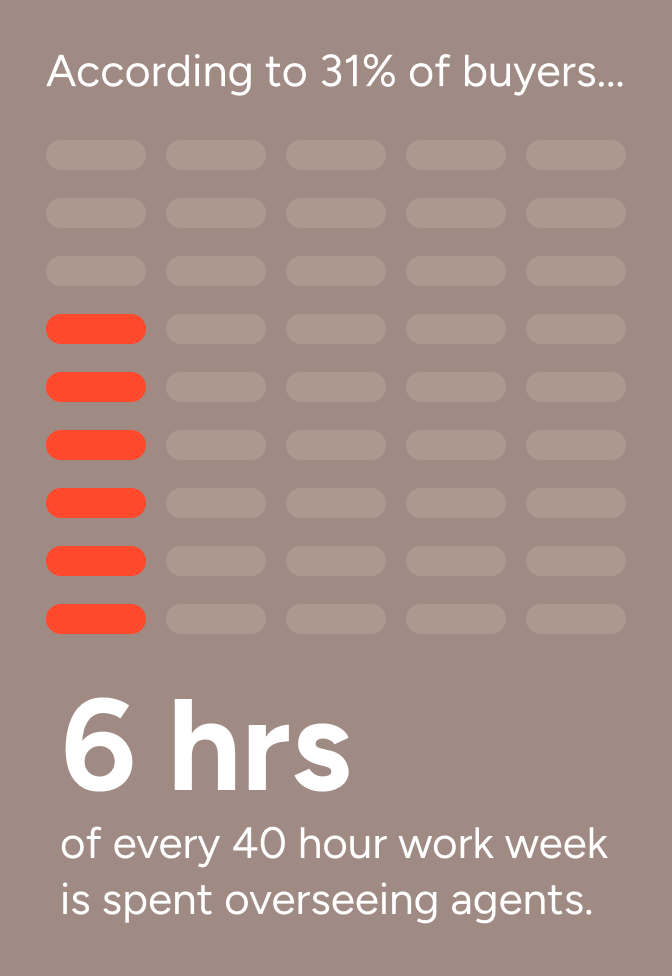
The agent Trust Gap has now created a Distrust Tax that is eating into early returns. One in three B2B software buyers say employees spend at least six hours each week overseeing agent work. Agents promised to give us time back, but instead, many employees are spending almost an entire workday supervising the technology meant to reduce their workload.

What’s the impact of bot-sitting? Nearly half of agent buyers say oversight and rework wipe out more than a quarter of the productivity gains they expected from agents. Those are recurring costs that grow alongside an agent’s responsibilities, especially when the guidance on autonomy is murky or nonexistent.


The Distrust Tax grows with scale

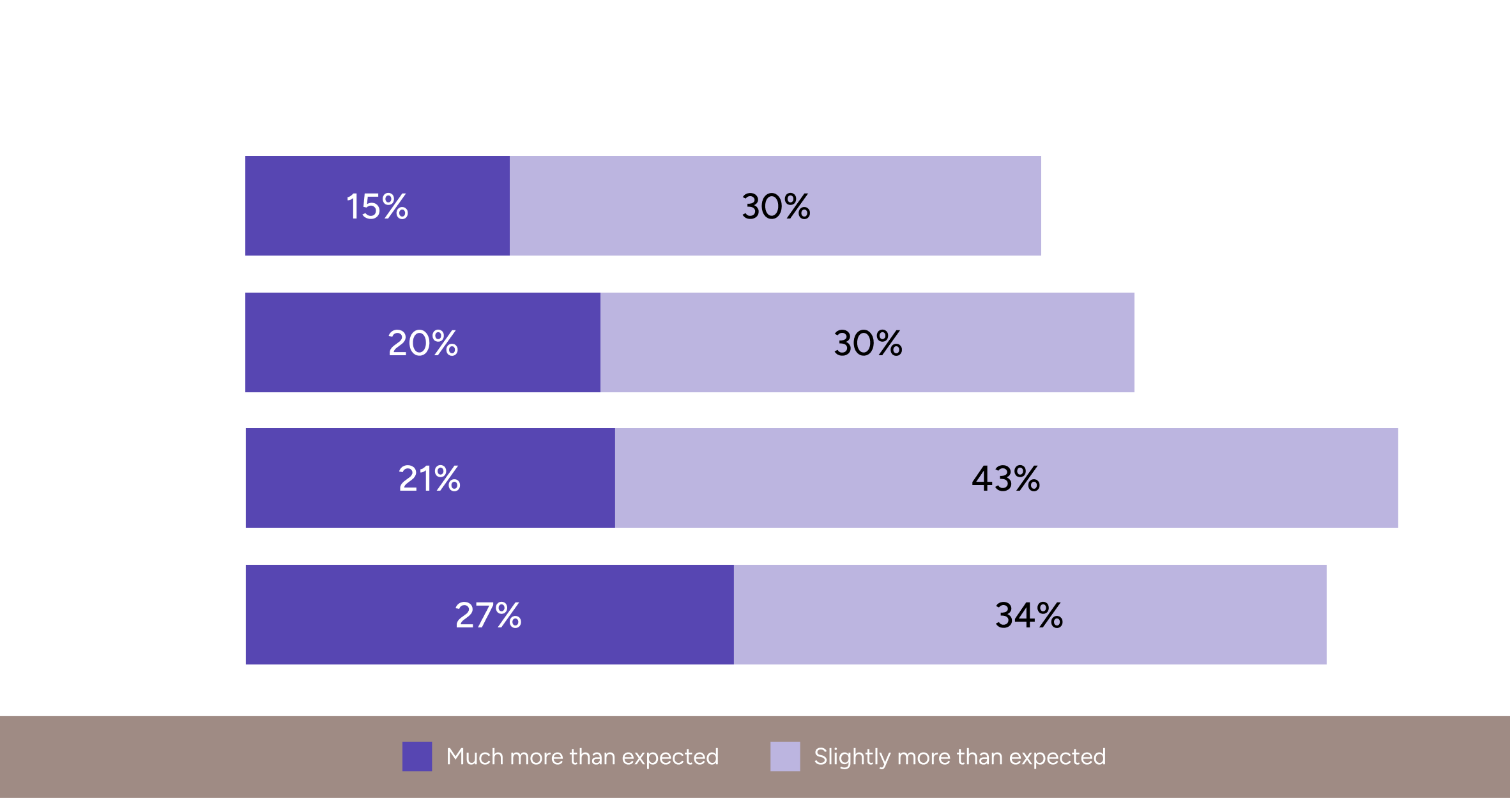
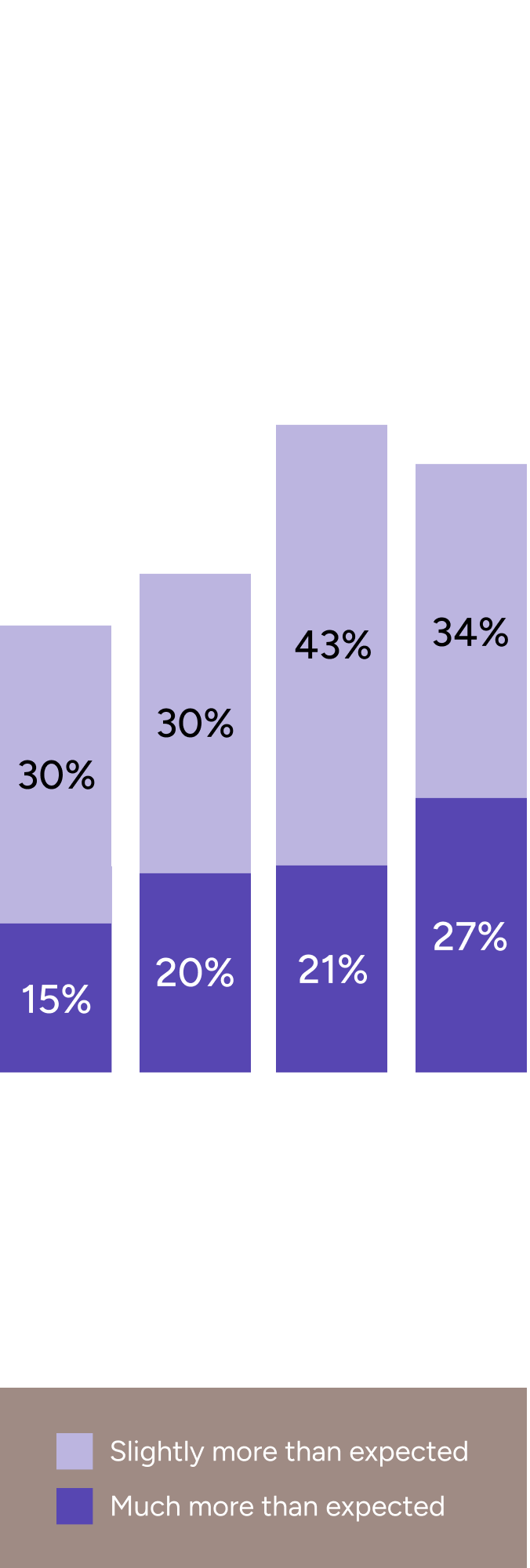
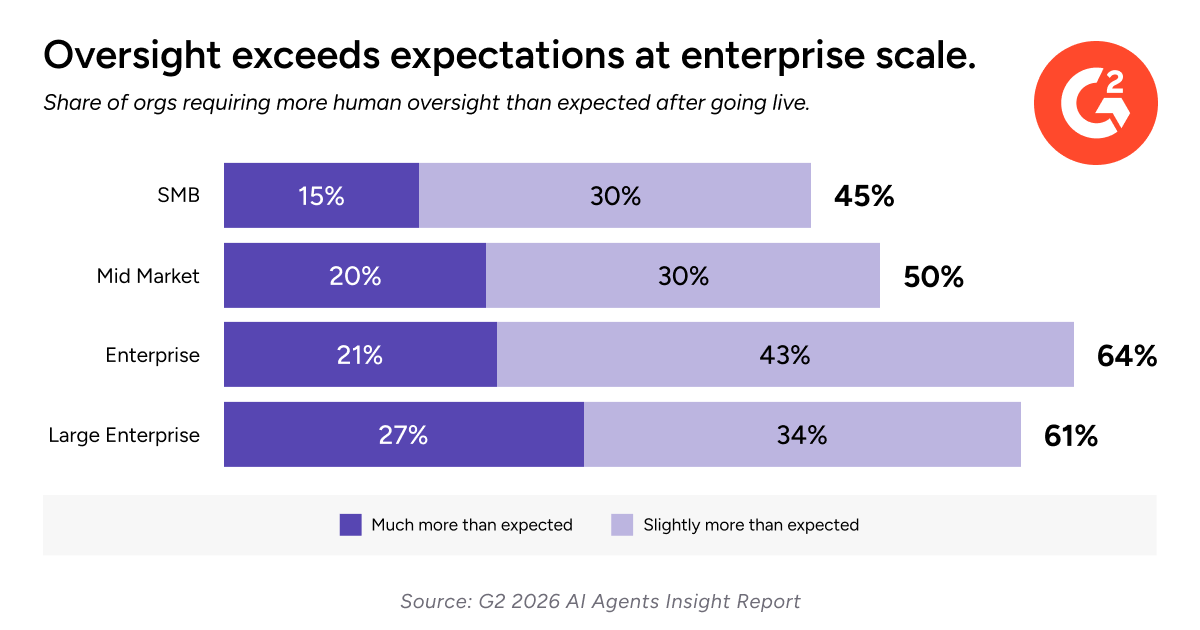
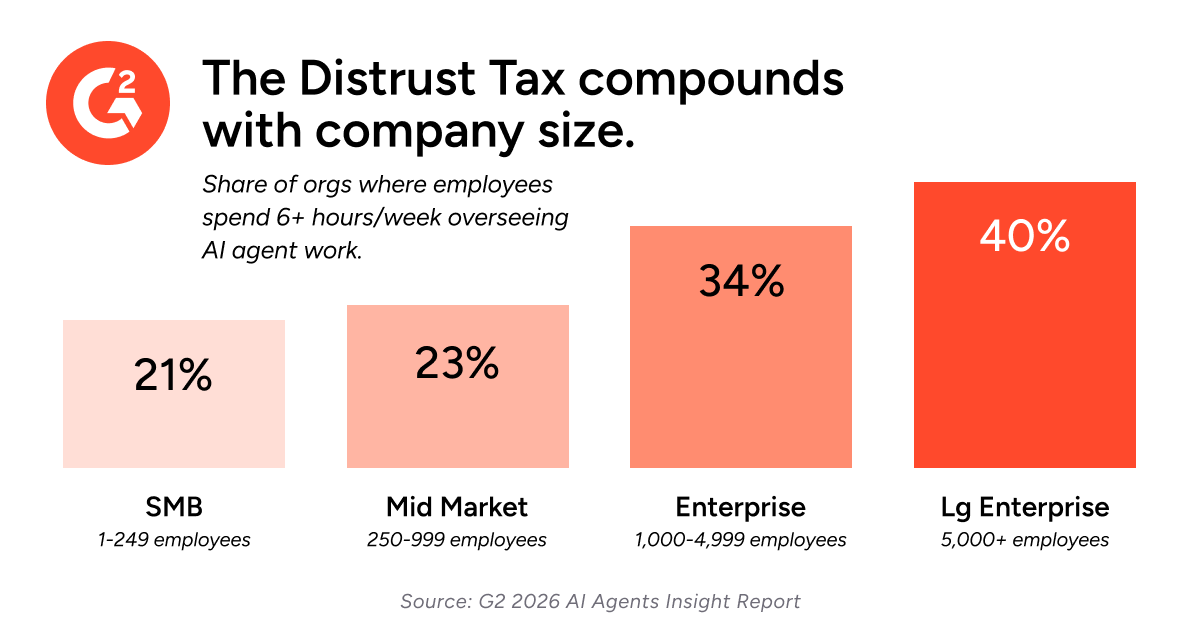
More than 6 in 10 enterprise organizations say agents require more human oversight than expected. At large enterprises, 27% require much more oversight, nearly twice the SMB rate. This is where the Trust Gap turns into a Distrust Tax. Once agents go live, concerns about reliability do not go away. Buyers keep paying for them.


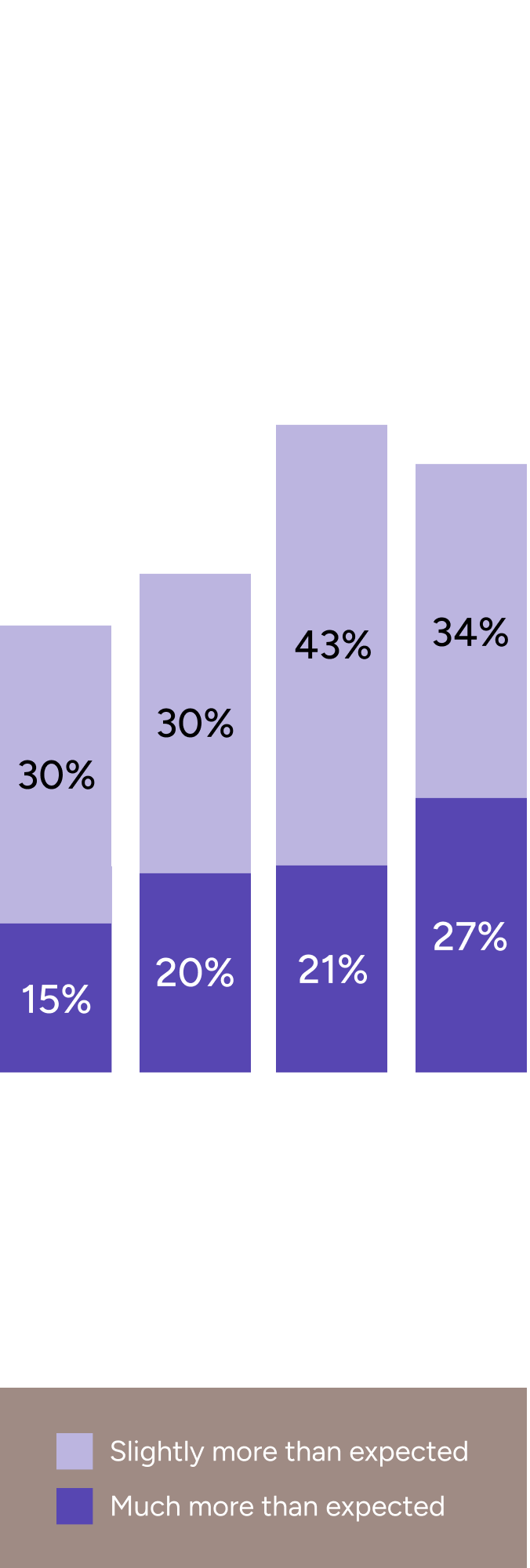
Horizontal stacked bar chart showing organizations reporting more human oversight than expected after agents went live: SMBs 15% much more and 30% slightly more, 45% total; mid-market 20% and 30%, 50% total; enterprise 21% and 43%, 64% total; large enterprise 27% and 34%, 61% total.Group 1010105891   Download   Download

The Distrust Tax is most severe at larger organizations. 4 in 10 large enterprises say employees spend at least 6 hours a week overseeing agents, nearly twice the SMB rate. And one in five say oversight and rework consume more than half of expected productivity gains, also nearly twice the SMB rate. More workflows, systems, permissions, and risk surfaces make oversight harder to contain.

Of the agent buyers we polled, the most time-consuming activities were:

  1. Reviewing agent outputs (26%)
  2. Fixing agent errors (24%)
  3. Approving agent actions (22%)

This gives us a much more grounded view of agent economics. Reviewing outputs, approving actions, correcting mistakes, and recovering from a failure are now part of the cost of doing business with agents.

Autonomy is expanding, but it remains conditional

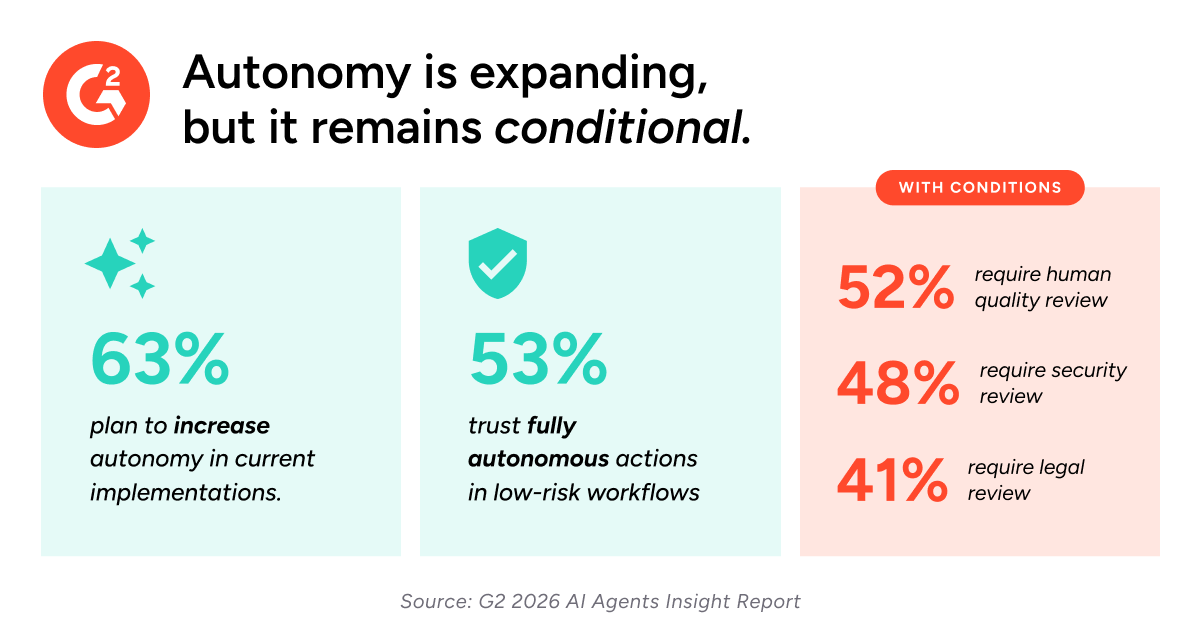
Agents crave autonomy, and companies want to grant them more responsibilities. 63% plan to increase autonomy in their current implementations, a sign that most buyers see room for agents to move beyond the tasks they handle today.

But the trust gap remains. Only 53% say they trust agents to take fully autonomous actions in low-risk workflows, and companies are building formal checks into the path to production: 52% require human quality review, 48% require security review, and 41% require legal review.

Rather than handing over broad control, companies are defining where an agent can act independently, when it needs to escalate, and which actions still require a person’s judgment. That is the difference between putting agents into a workflow and delegating meaningful work to them.

63%

plan to increase autonomy in current implementations.

53%

trust fully autonomous actions in low-risk workflows

WITH CONDITIONS

52%

Require human
quality review

48%

Require security
review

41%

Require legal
review

  Download

Trust has to hold up in the workflow

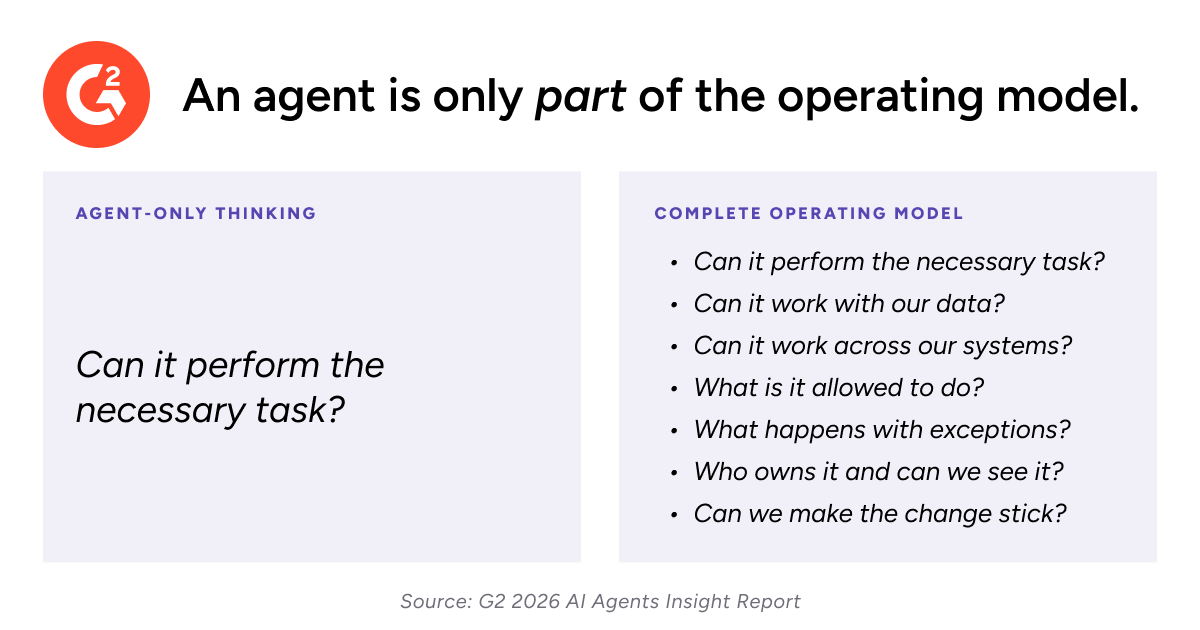
An agent that performs well in a clean, bounded workflow may not be enough from a buyer’s perspective. Once it encounters incomplete data, conflicting policies, or an exception that does not fit the original design, the quality of the surrounding operating model becomes just as important as the agent itself.

Early adopters can accept a promising product with a few rough edges when it helps solve an urgent problem. Pragmatic buyers need dependable improvement inside the systems they already use, supported by trusted data, clear guardrails, reliable recovery paths, and a practical way to measure whether the gains hold up.

As agents scale across more workflows, those requirements become harder to manage through manual intervention alone. Teams need a clearer view of which agents are operating on their behalf, who owns them, what they can access, and where human involvement is still required.

An agent is only part of the operating model.

Illustrative view based on the decline in companies reporting more human oversight than expected.

AGENT-ONLY THINKING

Can it perform the necessary task?

COMPLETE OPERATING MODEL

  • Can it perform the necessary task?
  • Can it work with our data?
  • Can it work across our systems?
  • What is it allowed to do?
  • What happens with exceptions?
  • Who owns it and can we see it?
  • Can we make the change stick?
  Download

What this means for agent vendors

  • Make the cost of oversight visible. Show buyers how human approvals, review, exceptions, and rework affect net cycle time and cost per completed outcome. Many buyers do not realize how much speed they give back by requiring approval at multiple steps.
  • Give customers a path to greater autonomy. Define what the agent can handle independently today, when it should escalate, and what performance or control thresholds will allow it to take on more over time.
  • Make the operating model part of the product. Trusted data, integrations, visibility, guardrails, recovery paths, and implementation support determine whether an agent remains a promising deployment or becomes a repeatable business capability.
Frame 27237
SHADOW
AGENTS
are the new Shadow IT

Agent proliferation is outpacing management models

Production creates a visibility problem, as agent usage is growing much faster than many companies anticipated. Our research found that 38% of organizations with agents in production run more than 100 of them, and 15% say they have between 501 and 1,000. Yet the visibility and management of those agents are still largely decentralized. 

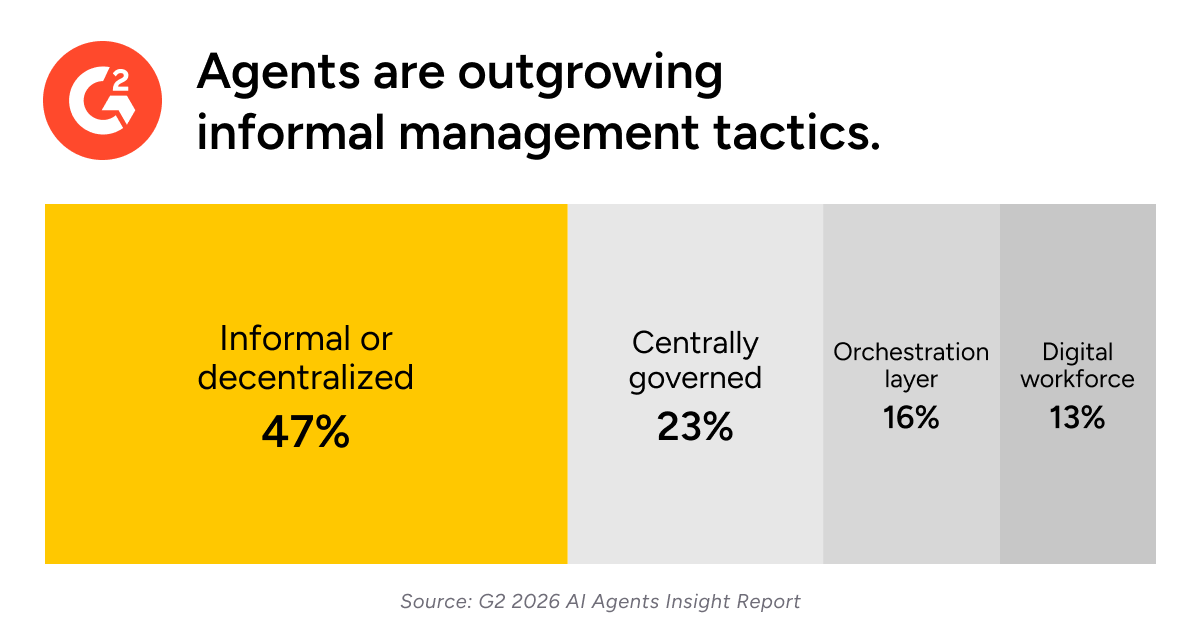
47% of B2B software buyers say their AI agent ownership and controls remain informal or primarily department-led, and just 23% are centrally governed. Even fewer use an orchestration layer (16%) or manage agents as a digital workforce (13%).

When hundreds of agents are in production, the informal practices that helped individual teams move quickly are no longer viable. Each agent needs a visible owner and a clear control model once it can operate in a shared business environment.

Horizontal segmented bar showing agent management models: informal or decentralized 47%, centrally governed 23%, orchestration layer 16%, and digital workforce 13%.   Download

Horizontal segmented bar showing agent management models: informal or decentralized 47%, centrally governed 23%, orchestration layer 16%, and digital workforce 13%.   Download


Invisible agents can’t be governed

Shadow IT became a defining enterprise problem in the early 2010s during the mass consumerization of IT, when employees could adopt SaaS with little need for IT oversight. It introduced security risks, workflow silos, financial waste, and compliance headaches for the organization. Today, we’re seeing agents create a similar effect with much higher stakes.

Agents don’t sit in the background like software does. They can access data, trigger workflows, consume tokens and software services, and create downstream work that someone later needs to support, explain, or unwind. That raises the inherent risk, and, accordingly, the need for an agent inventory. When an agent behaves unexpectedly, companies have an urgent need to know who owns it, what systems and data it can access, which actions it took, what it costs to run, and how to recover from the result.

Most organizations have not built that level of visibility. Just 27% maintain a central AI agent registry, 18% use automated discovery across sanctioned and unsanctioned agents, and 14% have real-time observability into unusual behavior, costs, or risks. As agent deployment accelerates, the businesses that can identify and govern those systems will be better positioned to expand their use without creating a growing pool of unaccountable work.

Agent governance is returning to IT

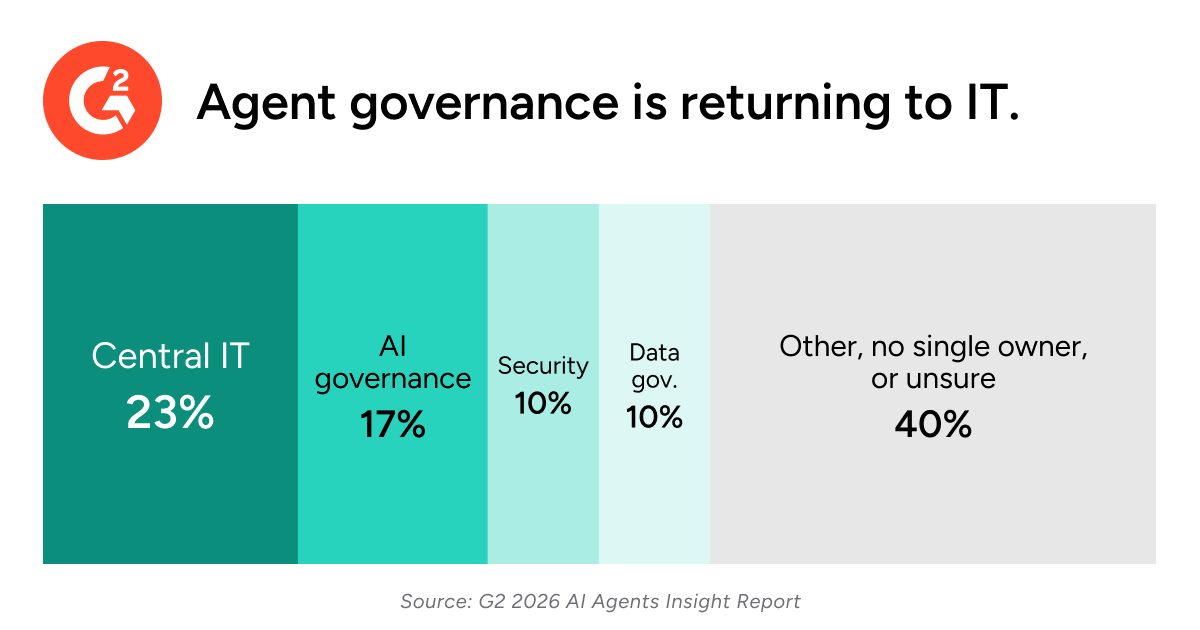
Functional leaders will continue to identify the use cases where agents can create value. However, as agents connect to shared systems and take on more consequential work, accountability is moving to IT and the teams that manage the underlying technology.

Central IT, along with AI, data, and machine learning (ML) teams, now manage about half (49%) of agent operating costs, and they collectively own 60% of governance accountability. The center of gravity is shifting from simply deciding which software enters the business to governing the systems that increasingly perform work within it, including AI agents.

This changes the buying center. For vendors accustomed to selling directly to customer success, sales, or other functional leaders, IT is no longer only an approver. It is increasingly the team that must be convinced on risk, orchestration, and cost control alongside business value.

That creates a new division of responsibility. Business teams need room to design and improve the workflows they know best, but IT teams need a reliable way to set policy, assign ownership, manage permissions and spend, monitor activity, and coordinate a response when an agent produces an unexpected result. 

Vendors must address this lack of visibility. Visionaries may tolerate scattered experiments and incomplete visibility to gain an early advantage, but for pragmatists, governance is part of the product. They need to know who owns each agent, how it connects to systems, what it costs to run, and how the business will respond when an action goes wrong.

Without that control, they will keep agents on a short leash, limiting the autonomy and scale required to reach the mainstream.

What this means for agent vendors:

  • Make every agent self-documenting. Automatically create and continuously update a durable record of its owner, workflow, identity, permissions, connected systems, activity, and cost. Inventory cannot become an afterthought.
  • Treat observability and recovery as core agent capabilities. Provide live activity histories, policy alerts, escalation paths, and one-click controls to pause an agent or revoke its access when something goes wrong.
  • Build for a multi-vendor environment. Use open APIs and ready-made integrations to feed agent identity, activity, permissions, and costs into the systems IT already uses. Do not force customers to govern each agent through a separate dashboard.
Disrubpting
Agents are
disrupting
SaaS
disrupt-
ing SaaS

Agents are giving legacy SaaS pricing a makeover

Pricing can help build the bridge across the agent chasm. Visionaries are willing to make a large bet on a breakthrough, but pragmatists need a safer way in. SaaS lowered the barrier to enterprise software through subscriptions that scaled by user, and cloud infrastructure pushed the model further with pay-as-you-go consumption. Agent vendors likely need a similar on-ramp, giving buyers flexible ways to start small and expand spending as value is proven.

An agent completes work continuously, drawing on models, data, APIs, and software services as it moves across the stack. The human logins and seat licenses that have long defined SaaS are now a weaker proxy for the value agents create.

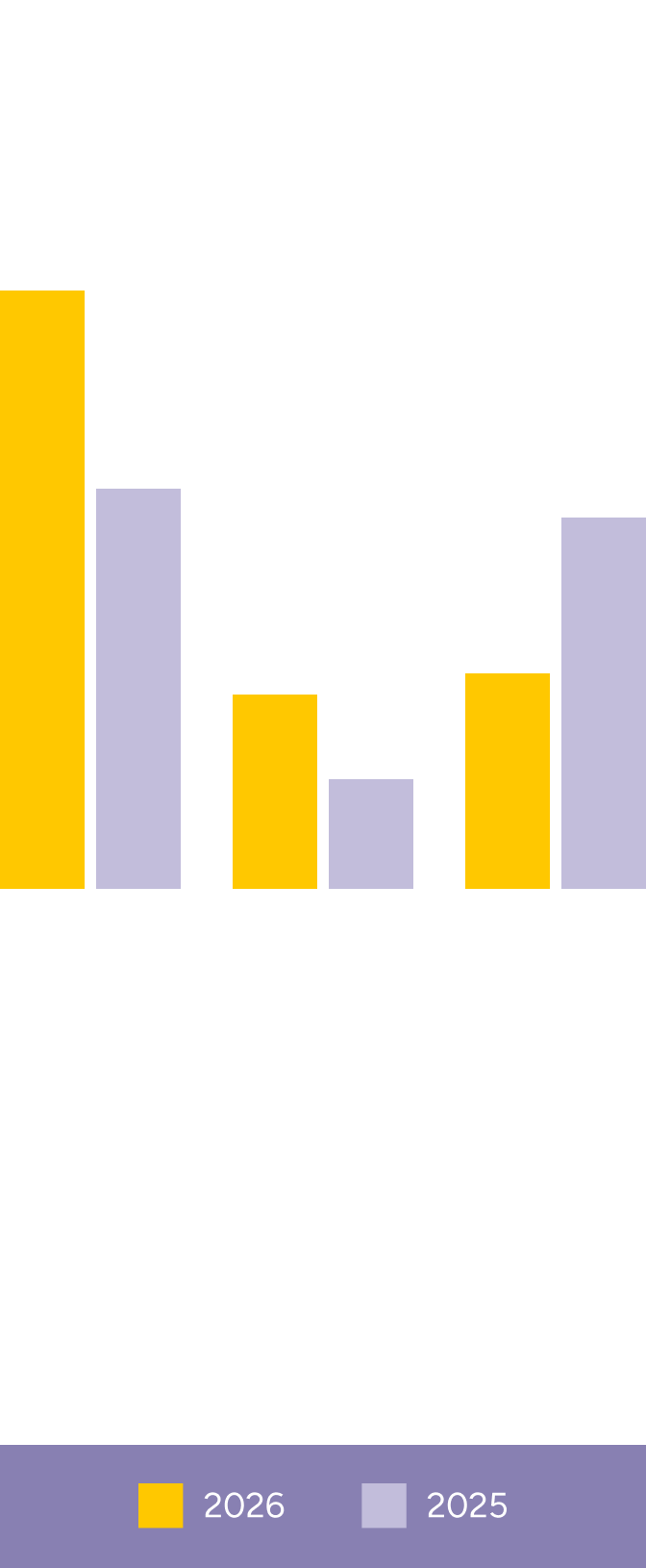
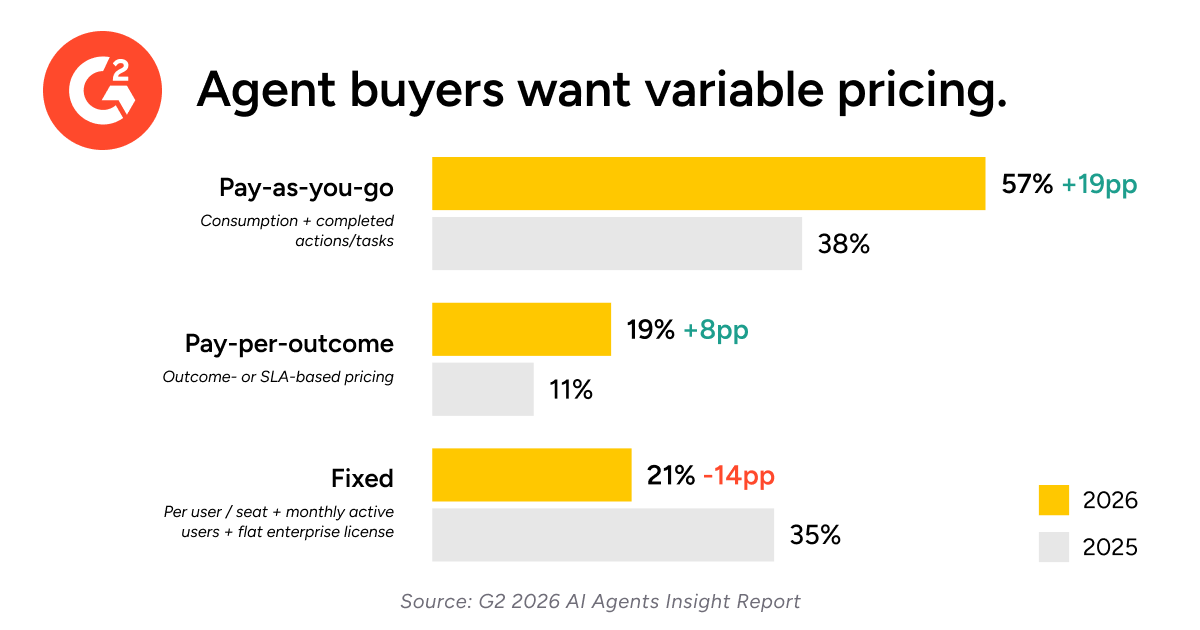
Only 9% of buyers consider per-user or per-seat pricing the fairest model for agent services. Buyer preferences are shifting toward variable pricing. Pay-as-you-go models, including consumption and completed actions or tasks, rose from 38% in 2025 to 57% in 2026. Pay-per-outcome pricing also increased, from 11% to 19%, while fixed pricing fell from 35% to 21%.

Consumption, per-action, and outcome pricing are different commercial models, but they share a basic departure from the SaaS model. Cost follows the work an agent performs rather than the number of people with access. As revenue becomes less tied to seats, the reporting and investor models built around predictable subscription growth will have to adapt.

Variable pricing still has to feel governable. Before buyers will accept rising costs, they expect the controls that make spend visible and manageable. According to buyers we surveyed, the top features to enable that are:

  1. Real-time usage dashboards
  2. Monthly spend caps 
  3. Cost-per-outcome reporting
  4. Lower-cost model routing 
  5. Forecasting before deployment

A meter that feels like a blank check will not earn the confidence of the mass market. Vendors will need to demonstrate that their agents’ work is accurate, reliable, and worth the spend.

Bar chart comparing preferred AI agent pricing models in 2026 and 2025. Pay-as-you-go rose from 38% to 57% (+19 percentage points), pay-per-outcome from 11% to 19% (+8), and fixed pricing fell from 35% to 21% (-14).   Download Bar chart comparing preferred AI agent pricing models in 2026 and 2025. Pay-as-you-go rose from 38% to 57% (+19 percentage points), pay-per-outcome from 11% to 19% (+8), and fixed pricing fell from 35% to 21% (-14).   Download

Buyers are choosing agent-builder platforms

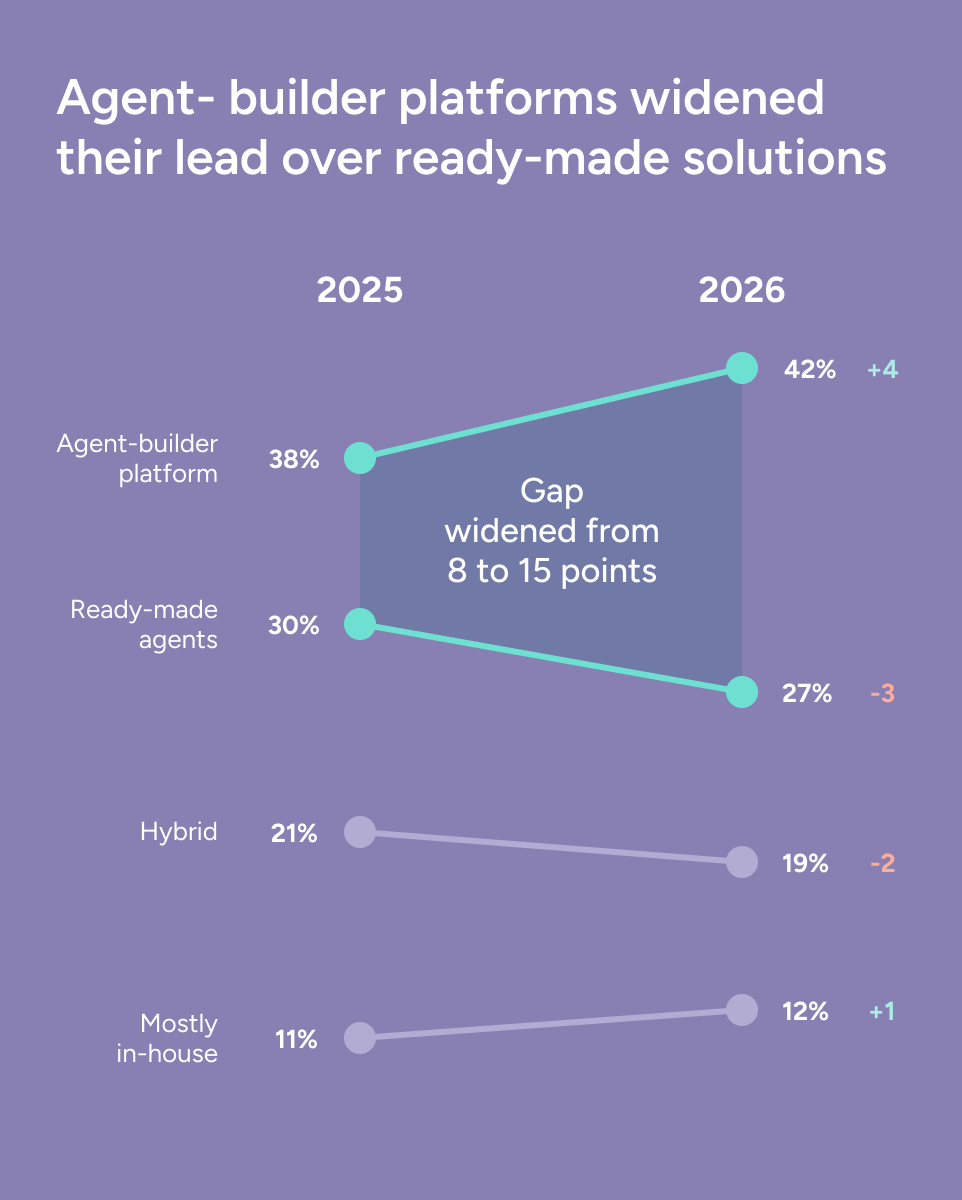
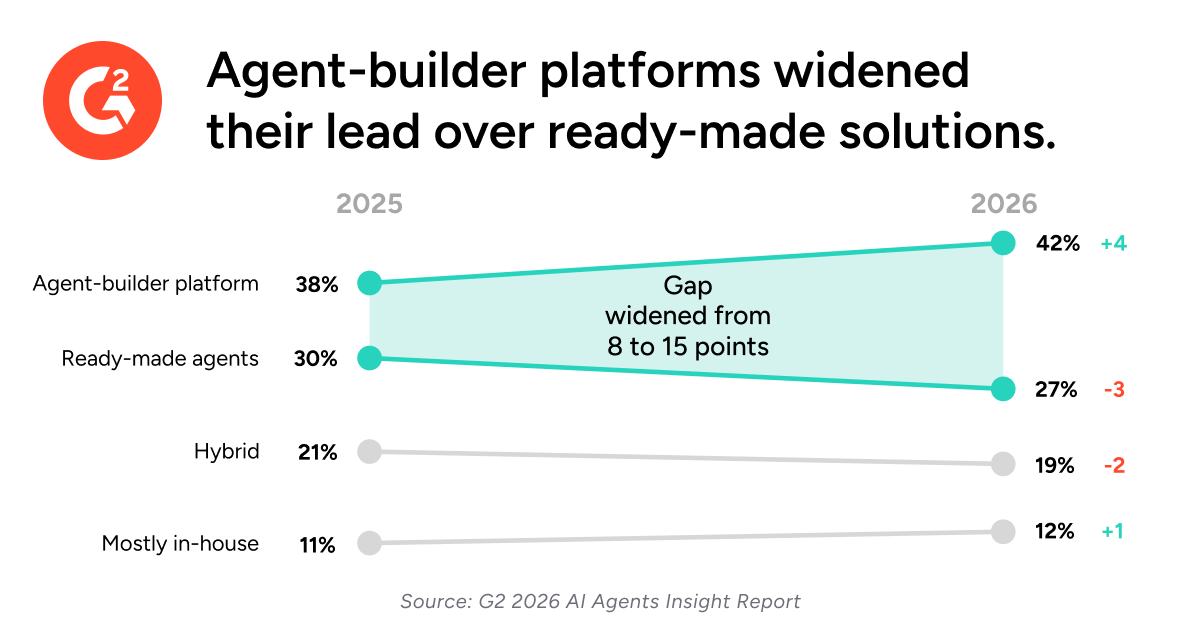
Agent builder platforms — such as those from Salesforce, ServiceNow, UiPath, and Microsoft — let companies tailor agents to their own workflows, while ready-made agents arrive as purpose-built solutions, often for a specific function or industry. Buyers are increasingly choosing the platform path because it gives them greater control to tailor agents to their workflows, data, systems, and governance requirements.

The share of buyers using agent-builder platforms rose to 42% in 2026, while the share using ready-made agents fell to 27%. The gap between the two approaches more than doubled, from 7.5 to 15.2 points.

That shift raises the bar for the whole product. Platforms need the connectors, actions, guardrails, and implementation support that turn a toolkit into a dependable enterprise capability.

Agent readiness is becoming table stakes

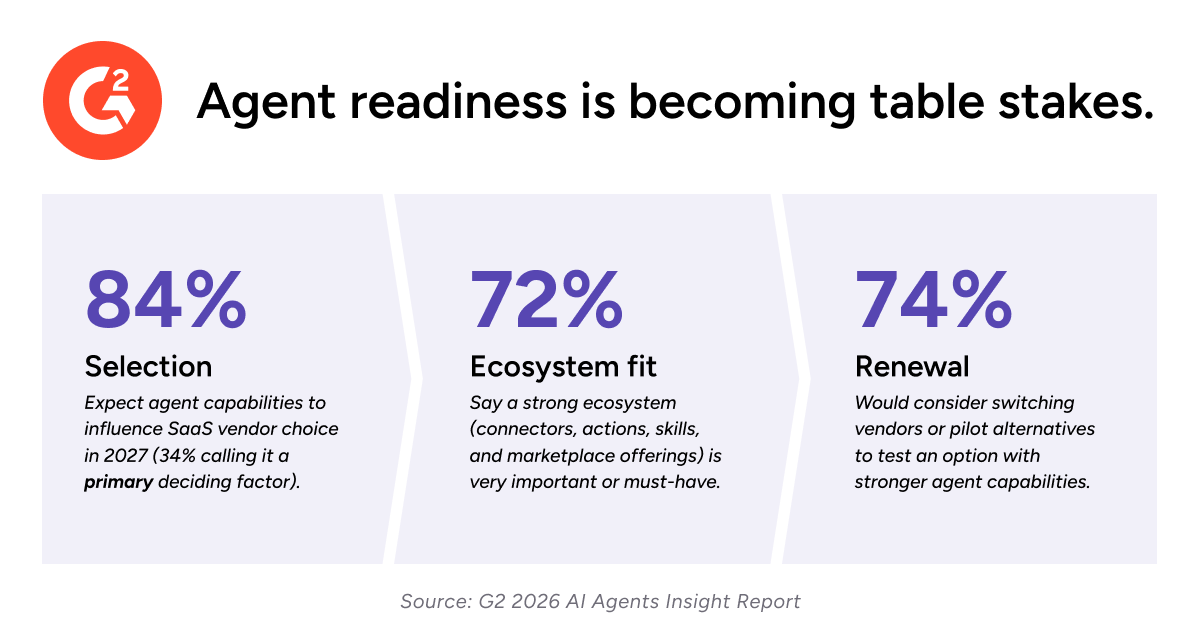
For mainstream buyers, agent readiness means more than adding an assistant to one corner of a product. 72% of buyers told us that a strong prebuilt ecosystem of connectors, actions, skills, or marketplace offerings is very important or a must-have when choosing an AI agent platform. 

That’s a completely reasonable expectation; buyers need agents that can work up, down, and sideways inside the systems they already rely on. If they can’t get that functionality, they’re open to switching vendors, particularly at the renewal stage. 30% of buyers said they would consider switching to a vendor with stronger agent capabilities, while another 44% would pilot an alternative and reconsider at renewal.

84%

Selection

Expect agent capabilities to influence SaaS vendor choice in 2027 (34% calling it a primary deciding factor).

72%

Ecosystem fit

Say a strong ecosystem (connectors, actions, skills, and marketplace offerings) is very important or must-have.

74%

Renewal

Would switch vendors to test an alternative with stronger agent capabilities.

  Download

Agents are reshaping the software stack

The next shift in software will happen one workflow at a time. Agents will coordinate work across applications and increase the value of products whose capabilities, data, and controls help complete that work.


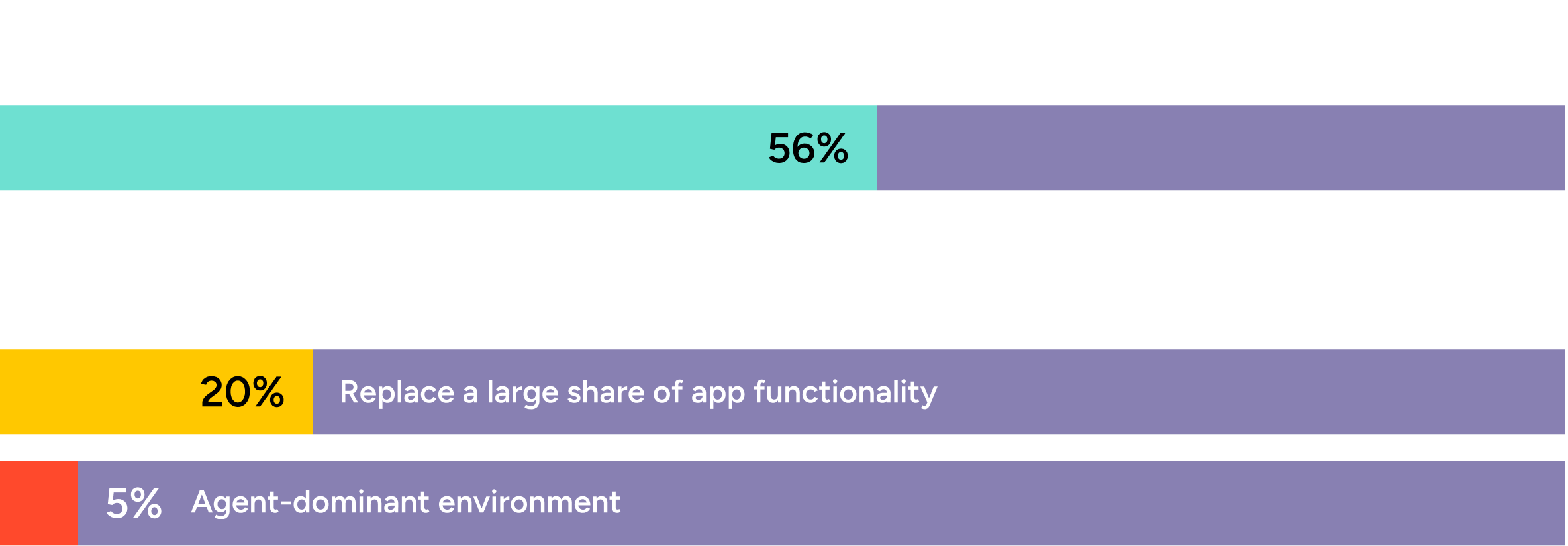
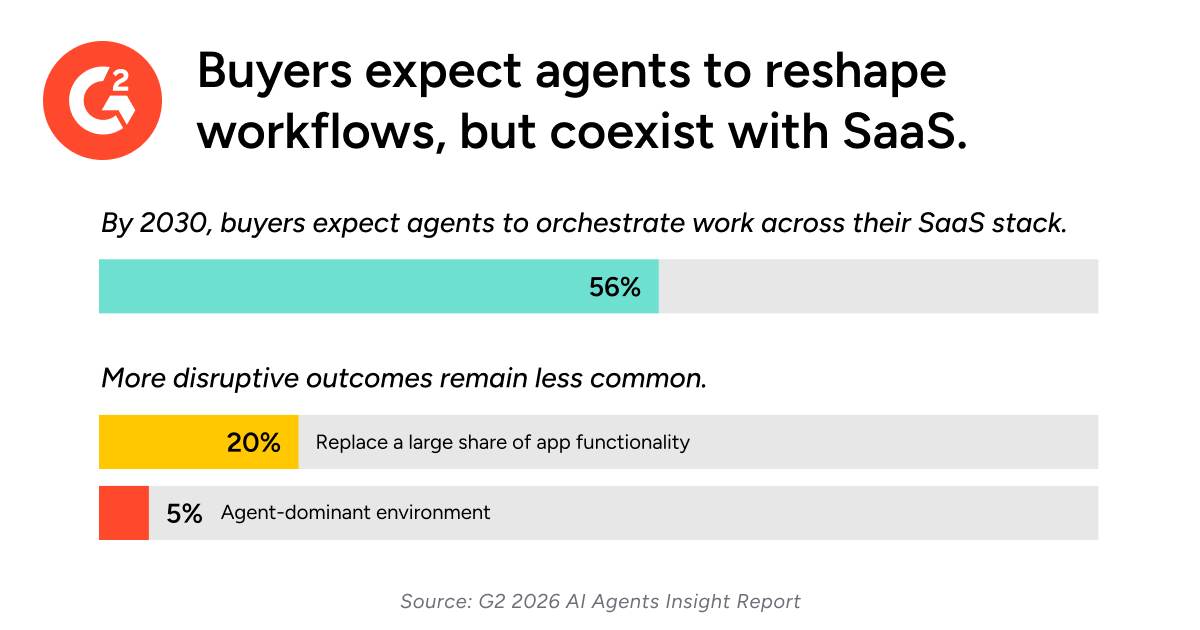
By 2030, 56% of buyers expect agents to orchestrate work across their SaaS stack and moderately reduce new SaaS purchases. Another 20% expect agents to replace a significant share of application functionality, while 5% expect an agent-dominant environment. Together, those expectations describe a meaningful reset in how software is consumed, and the reset is already underway.


Group 1010105925   Download


Among organizations with deployed agents, 66% say those agents exchange work across vendors or both within and across platforms. Only 8% say their agents operate independently. The software stack is becoming less a collection of separate destinations and more a set of capabilities that agents can call on to complete work.

What this means for agent vendors:

  • Let customers help shape the pricing model. Test subscription, pay-as-you-go, and outcome-based options, rather than forcing a single model across the entire customer base. Follow the signals from adoption, usage, expansion, and retention, then be willing to change your model from ARR (annual recurring revenue) to ARPA (annual revenue per account) as the agent market matures.
  • Make agent readiness concrete. Productize the connectors, actions, APIs, and data context that let agents work across the systems customers already use.
  • Design for a more fluid stack. Make handoffs, permissions, data exchange, and reliability across other products as strong as the experience inside your own.
Frame 27238
Buyers hold
agents to
a higher
standard
of proof
a higher
standard
of proof
than traditional software

Better evidence leads to more trust

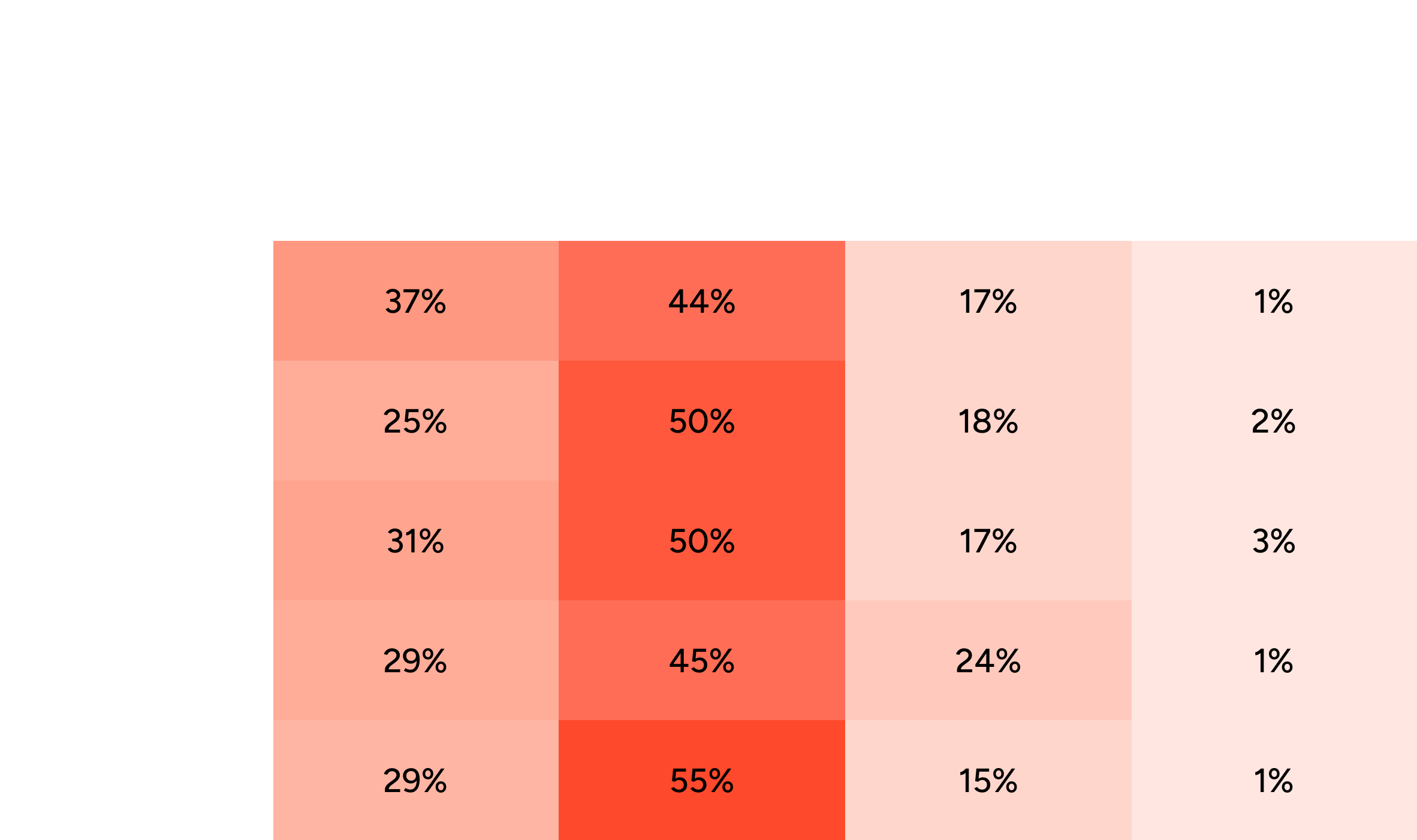
Whether an agent is granted autonomy in production depends heavily on the evidence of its performance during the evaluation period. Among buyers who recently evaluated an agent vendor, half used their own data science team's assessment to verify the vendor’s claims, and 4 in 10 either ran a hands-on test or proof of concept, made reference calls, consulted third-party analyst evaluations, or consulted independent benchmarks.

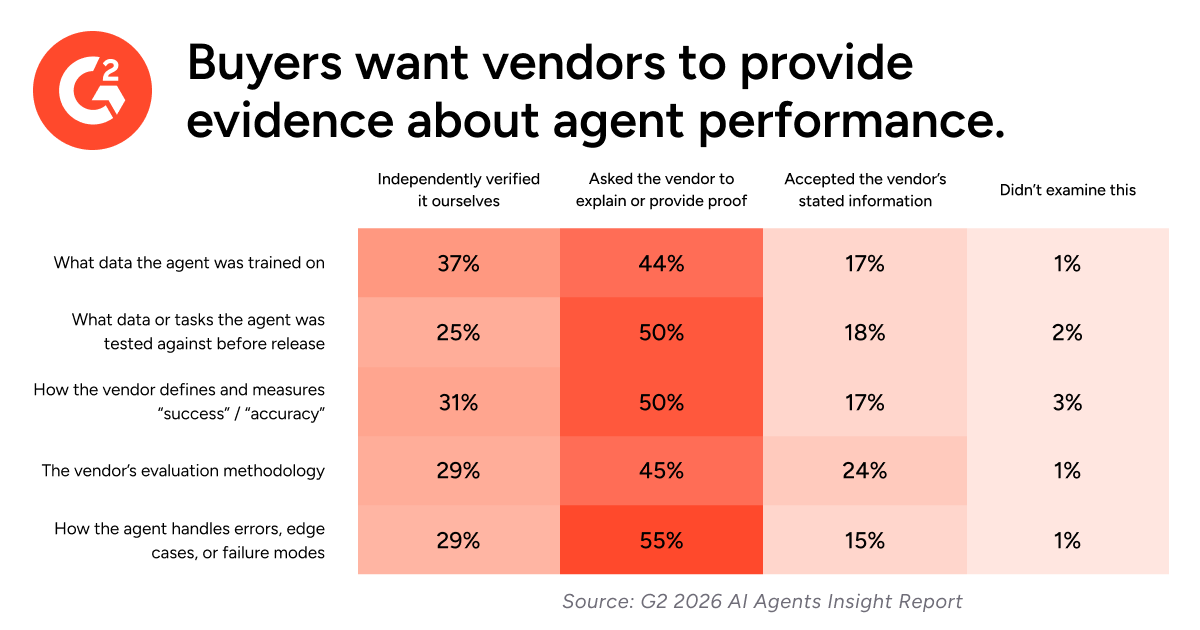
During those evaluations, buyers ask for several forms of evidence, often pressing vendors to substantiate claims about what an agent can do, how it was tested, and how it handles failure. The most common requests were for evidence of how the agent handles errors and edge cases (55%), what it was tested against before release (50%), and how the vendor defines success (50%).


Heatmap showing how buyers evaluate vendor claims. For evidence about training data, 37% independently verify it, 44% ask the vendor for proof, 17% accept the vendor’s information, and 1% do not examine it. For pre-release testing, the figures are 25%, 50%, 18%, and 2%; for success or accuracy definitions, 31%, 50%, 17%, and 3%; for evaluation methodology, 29%, 45%, 24%, and 1%; and for errors, edge cases, or failure modes, 29%, 55%, 15%, and 1%.   Download

That is the burden of proof in the agent market. A good output means little if no one can explain the process that produced it, the constraints operating around it, or whether it can be repeated in a buyer’s own workflow.

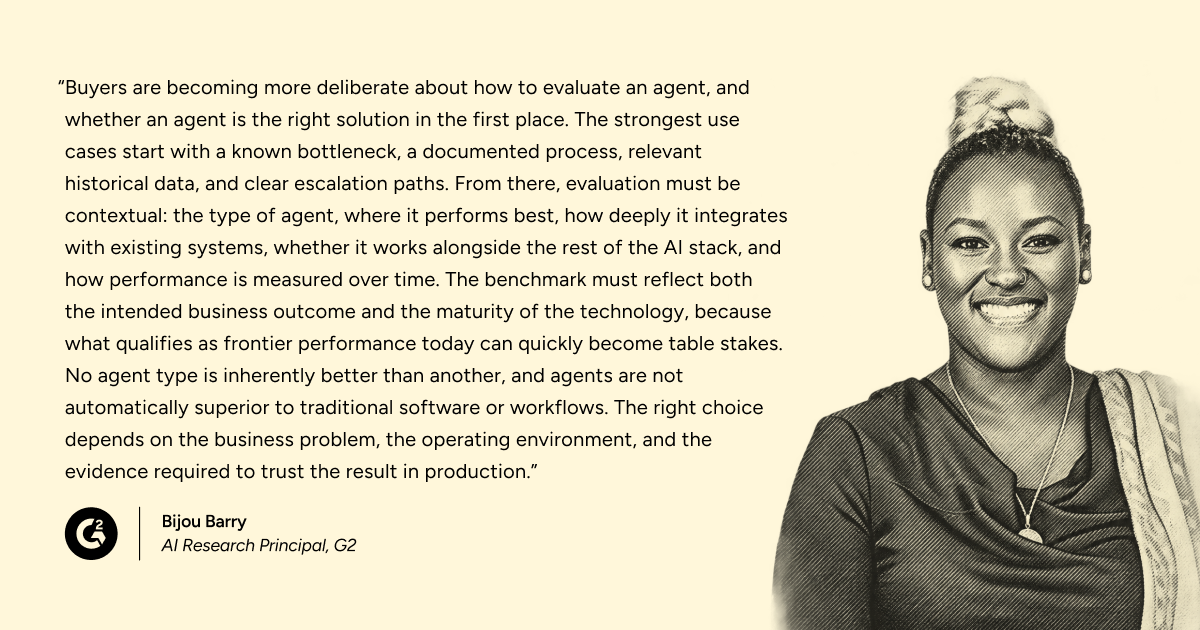
“Buyers are becoming more deliberate about how to evaluate an agent, and whether an agent is the right solution in the first place. The strongest use cases start with a known bottleneck, a documented process, relevant historical data, and clear escalation paths. From there, evaluation must be contextual: the type of agent, where it performs best, how deeply it integrates with existing systems, whether it works alongside the rest of the AI stack, and how performance is measured over time. The benchmark must reflect both the intended business outcome and the maturity of the technology, because what qualifies as frontier performance today can quickly become table stakes. No agent type is inherently better than another, and agents are not automatically superior to traditional software or workflows. The right choice depends on the business problem, the operating environment, and the evidence required to trust the result in production.”


Bijou Barry
AI Research Principal, G2
ChatGPT Image Oct 7, 2026, 08_29_31 AM 1
  Download

Proof should earn agents more control

Production is where the claims made in a demo encounter the messier reality of business processes: incomplete data, unexpected exceptions, security requirements, policy constraints, and users who do not behave as expected. 

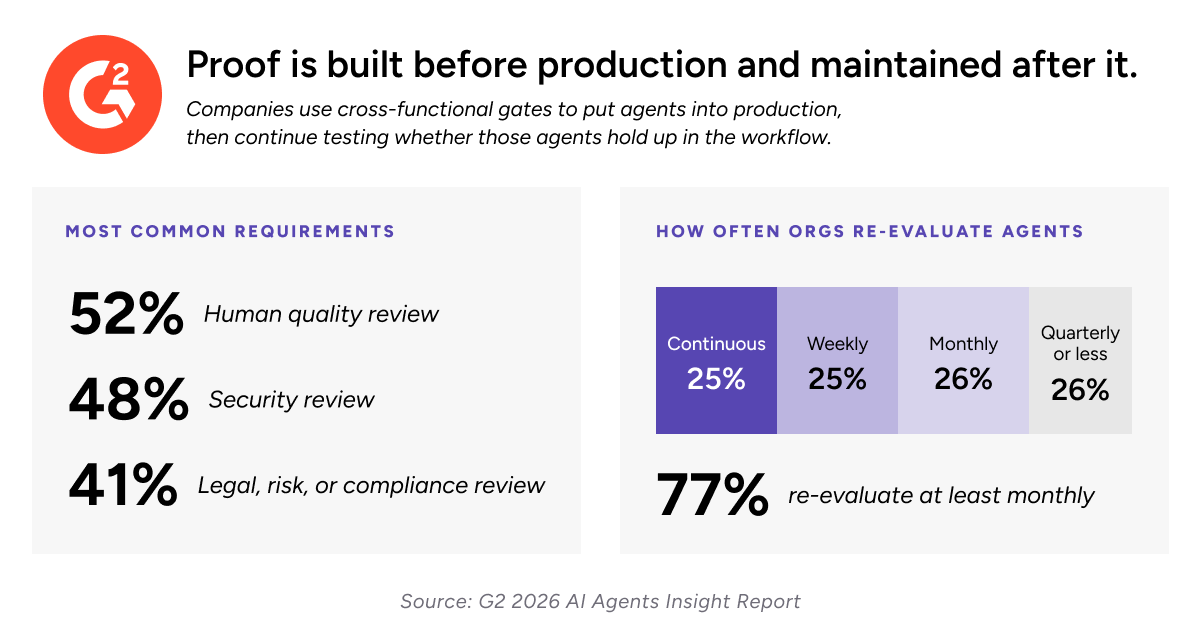
Before agents enter production, 52% of buyers said their organizations require human quality review, 48% require security testing, and 41% require legal, risk, or compliance review. Once deployed, 77% re-evaluate production agents at least monthly.

These practices form the early version of a trust architecture, including testing methods, feedback loops, and permissions that will only expand if agent performance remains strong. A score on a general benchmark can open the conversation, but it cannot tell a process owner whether an agent will take the right action inside that company’s policies, systems, and exceptions. The proof buyers need is grounded in the work the agent is being asked to do.

Proof is built before production and maintained after it.

Companies use cross-functional gates to put agents into production, then continue testing whether those agents hold up in the workflow.

MOST COMMON REQUIREMENTS


52%

Human quality review

48%

Security review

41%

Legal, risk, or compliance review

HOW OFTEN ORGS RE-EVALUATE AGENTS


Continuous

25%

Weekly

25%

Monthly

26%

Quarterly or less

26%

52%

Human quality review

  Download

Trust does not equal total autonomy

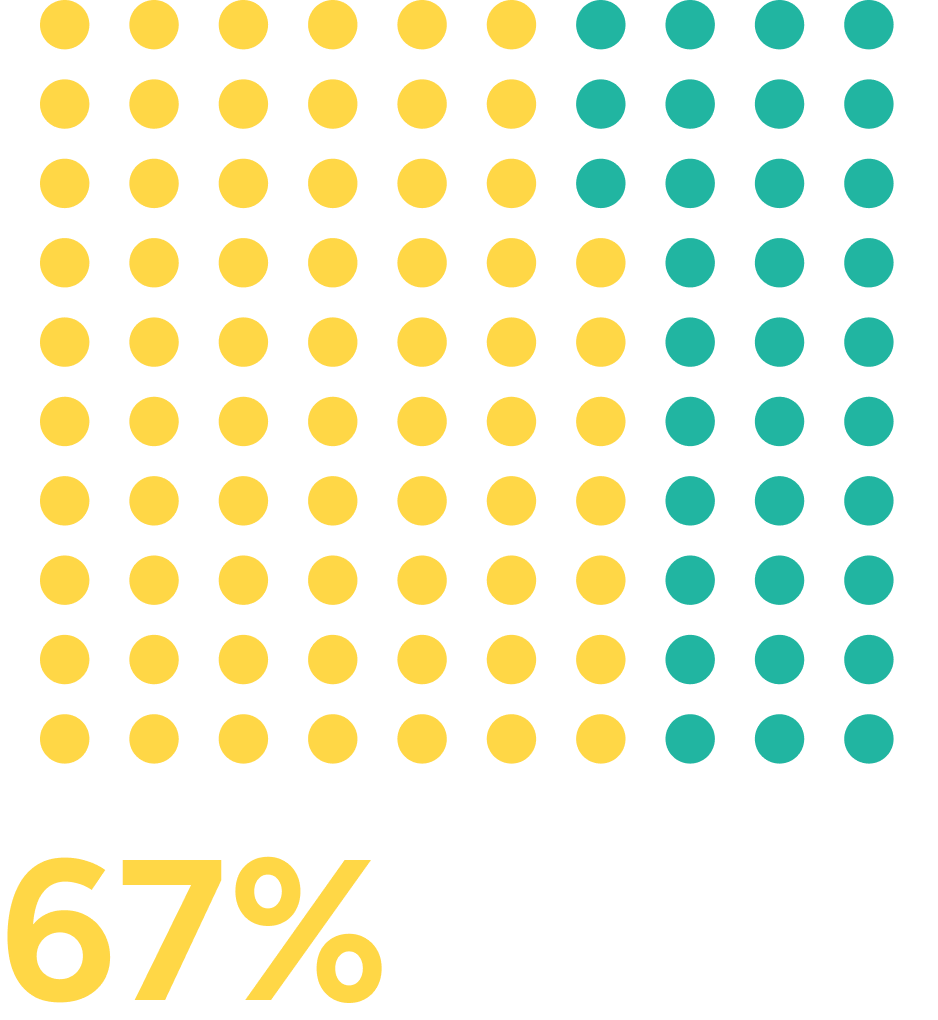
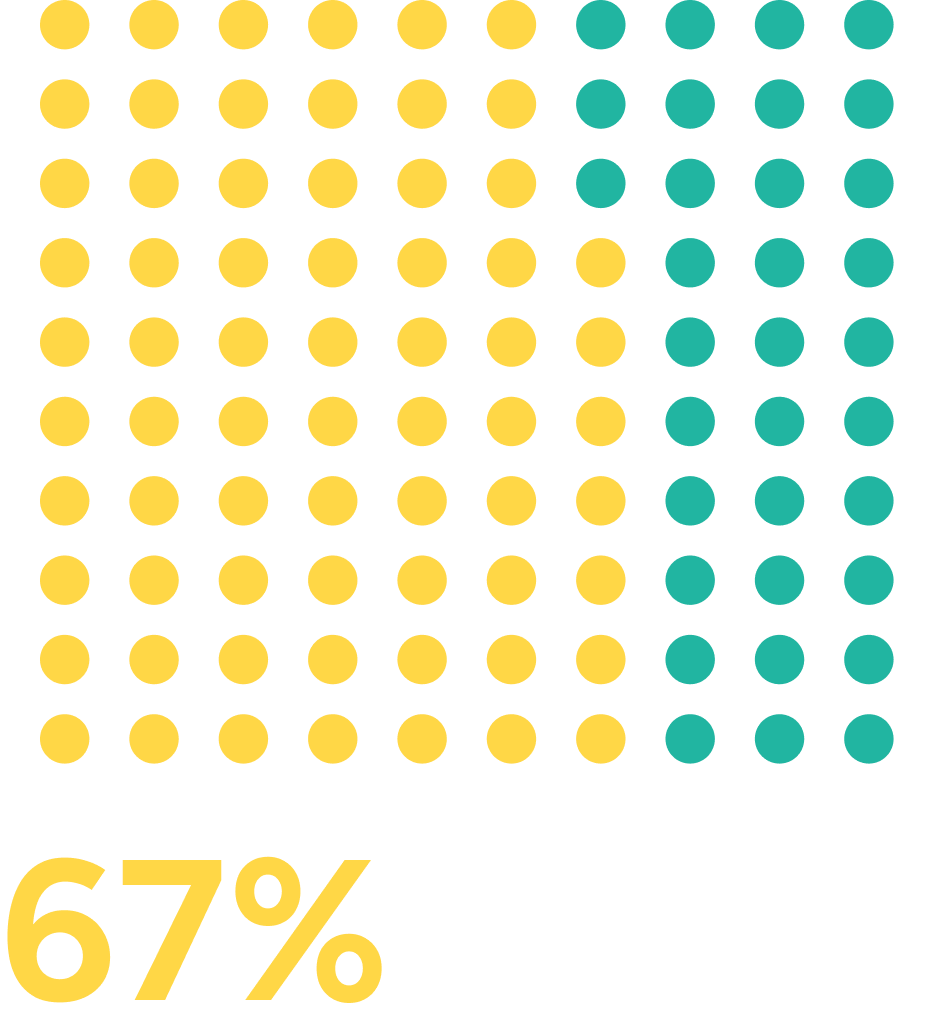
Trust arrives on a mule, but it leaves in a Maserati, and that is proving true for AI agents. G2 review data shows that 67% of B2B software buyers trust their organization’s AI system quite a bit or very much, yet 48% prefer agents with guardrails. Another 29% want them limited to specific tasks, and only 7% would hand over total autonomy.

A low-risk task can run with a light touch, but consequential work requires more evidence, closer monitoring, and a clear path to intervene. Evidence is what lets teams expand control and narrow the trust gap without turning every autonomous action into another approval queue. 

Today, that type of evidence is largely absent from the agent market. Without a standardized way to measure agent performance in critical areas like accuracy, compliance, relevance, and completeness, buyers can’t make an informed decision. It’s one of the biggest reasons G2 recently beta-launched AI Agent Evaluations — because the market has a strong need for a neutral, trusted evaluation layer to help pragmatists compare enterprise agent performance before they buy.

Vendors that make their evidence legible, repeatable, and relevant to a buyer’s own work will have a much clearer path to the pragmatists who decide how quickly agents cross the chasm.

What this means for agent vendors

  • Publish a testable definition of performance. Show the tasks, operating context, success criteria, policy constraints, and failure modes behind performance claims.
  • Make evidence available beyond the demo. Give buyers traces, evaluation reports, reliability data, reference customers, and a clear explanation of how the agent behaves when the workflow gets messy.
  • Treat independent evaluation as part of the product story. Pragmatic buyers need credible, comparable signals that help them verify performance before and after they give an agent more control. Request a G2 AI Agent Evaluation here.

What comes next

The next two years will decide whether AI agents remain a collection of impressive deployments or become an everyday operating layer of the enterprise. 54% of buyers expect agents to primarily manage more than a quarter of their organization’s workflows by 2028, including 25% who expect them to manage more than half.

Early adopters can live with promise and custom work, but for agents to cross the chasm, software vendors will need to turn early results into proof that the mass market can use. Those buyers expect evidence that an agent can improve a familiar workflow, operate within the company’s systems and policies, and deliver a return that holds up after accounting for compute, oversight, exceptions, and rework.

The market will move as those stories become repeatable and comparable. The vendors that make performance legible, costs manageable, and control credible will be the ones that give the mainstream market a reason to adopt agents at a mass scale.

ChatGPT Image Oct 7, 2026, 12_46_09 PM 1

Methodology

G2 fielded an online survey among 1,019 B2B decision-makers responsible for or influencing purchase decisions for departments, multiple departments, operating units, or entire businesses. Respondents had job titles ranging from individual contributor to manager, director, vice president, or higher.

To maximize differentiation for vendors, this survey defines small-medium business (SMB) as a company with 1-249 employees, mid-market as a company with 250-999 employees, enterprise as a company with 1,000-4,999 employees, and large enterprise as a company with 5,000+ employees. The survey was conducted in July 2026 and included a global pool of respondents across North America, EMEA, and APAC.

“Agents in limited or scaled production” refers to an agent being used in a live business workflow, rather than a demo, proof of concept, or time-limited pilot. Agents in production handle real work within an organization’s actual data, systems, and operating rules. Production may be limited to specific teams or workflows, or scaled across the organization. It does not imply fully autonomous operation.

This report also cites software review data from G2.com. Over 2,500 software reviews in G2’s AI Agent Builder category from March-August 2026 were referenced to illustrate agent use cases. Generative AI reasoning models were used to define the study’s focus areas, optimize survey design, and analyze results to inspire writing and data visualizations.

About G2

G2 is the world’s largest and most trusted data source on B2B software, helping businesses reach their peak potential by enabling confident buying and go-to-market decisions. Offering trusted data, authentic peer reviews, and real-time market intelligence, the G2 ecosystem — which includes Capterra, Software Advice, and GetApp — serves more than 200 million annual buyers, representing teams at every Fortune 500 company.

As buyers increasingly shift from traditional search to AI search platforms, G2 has become the most-cited B2B software source across those AI-first channels where software discovery happens. Leading software and services companies like Salesforce, IBM, SAP, Adobe, and Clay also trust G2 to influence discovery, build brand credibility, reach in-market buyers, and accelerate revenue growth. To learn more, visit www.g2.com and follow us on LinkedIn.