
<img height="1" width="1" style="display:none" src="https://www.facebook.com/tr?id=1268168780589904&amp;ev=PageView&amp;noscript=1">

Introduction from Tim Sanders

B2B software buyers have never had more credible software options at their fingertips and, at the same time, more obstacles to overcome in procuring the tools they need.

The discovery phase has compressed from hours of website browsing and report reviewing to a single prompt in an AI chatbot. In 2026, eight out of ten buyers employ AI search to be more efficient in buying. But they are soon met with a formidable challenge, trying to gain approval to purchase, likely created by AI’s growing narrative that it can be risky, expensive, and opaque.

In his book Reshuffle: What to do when AI restacks the knowledge economy, Sangeet Choudary observes, “Constraints aren’t simply eliminated from a system – they typically move to other parts of the system.”

In other words, as AI solves one constraint, it creates a new one. Now that the scarcity of software recommendations has been solved, the evaluation stage of the journey is bumpier than ever. That is where buyers compare finalists, validate proof, scrutinize pricing, assess security, pressure-test implementation, and come to a decision whether to commit to the spend.

The most obvious signal of this change in buyer journey? Just follow the money. Nearly half of software buyers have had an approved software purchase vetoed by the CFO in the last year, and seven in ten buyers say the pace of AI innovation is pushing them toward shorter contracts. The question is no longer just whether a product works — it is whether the pricing model makes the risk worth taking.

Based on a survey of more than 1,000 B2B software buyers and decision-makers — paired with interviews from more than 50 B2B sales and marketing leaders — G2's 2026 Buyer Behavior Report tracks the new evaluation gauntlet buyers face after they’ve selected a software vendor. It covers everything from how shortlists are formed to where deals stall and what separates the vendors that win from those that don't.


 
Tim Sanders
Chief Innovation Officer, G2
Frame 27246
01

Evaluation is now where
software deals are won and lost.

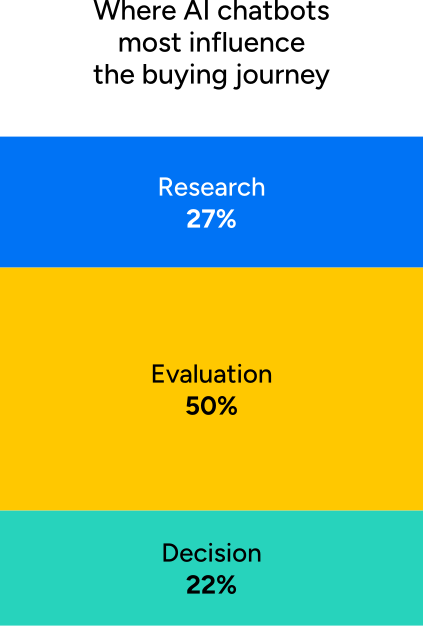
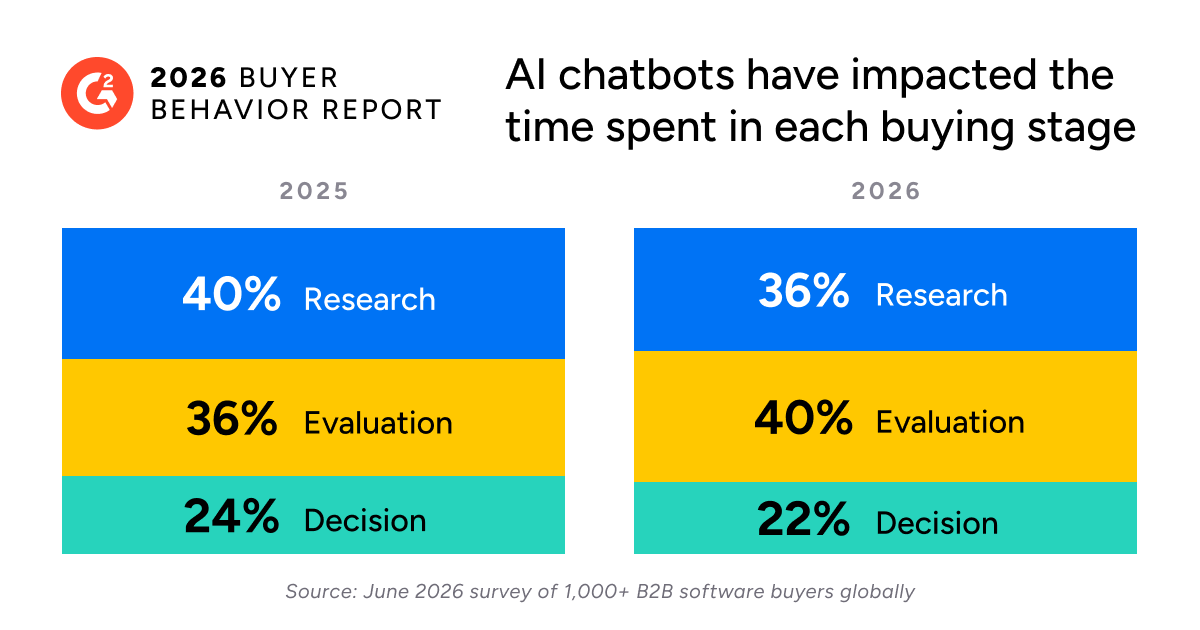
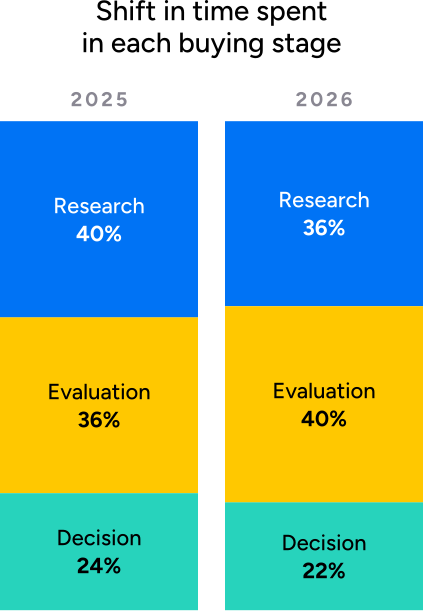
AI has made software easier to find, but it has not made evaluation any less demanding. Evaluation is now the longest stage of the buying journey for 40% of buyers, ahead of research (36%) and decision (22%). Buyers can get to a shortlist faster, but then, the real work starts. For software brands, the message is clear: Getting found matters, but the deal is won when buyers can evaluate you without finding new reasons to hesitate.

02

Shortlists form faster and earlier with AI.

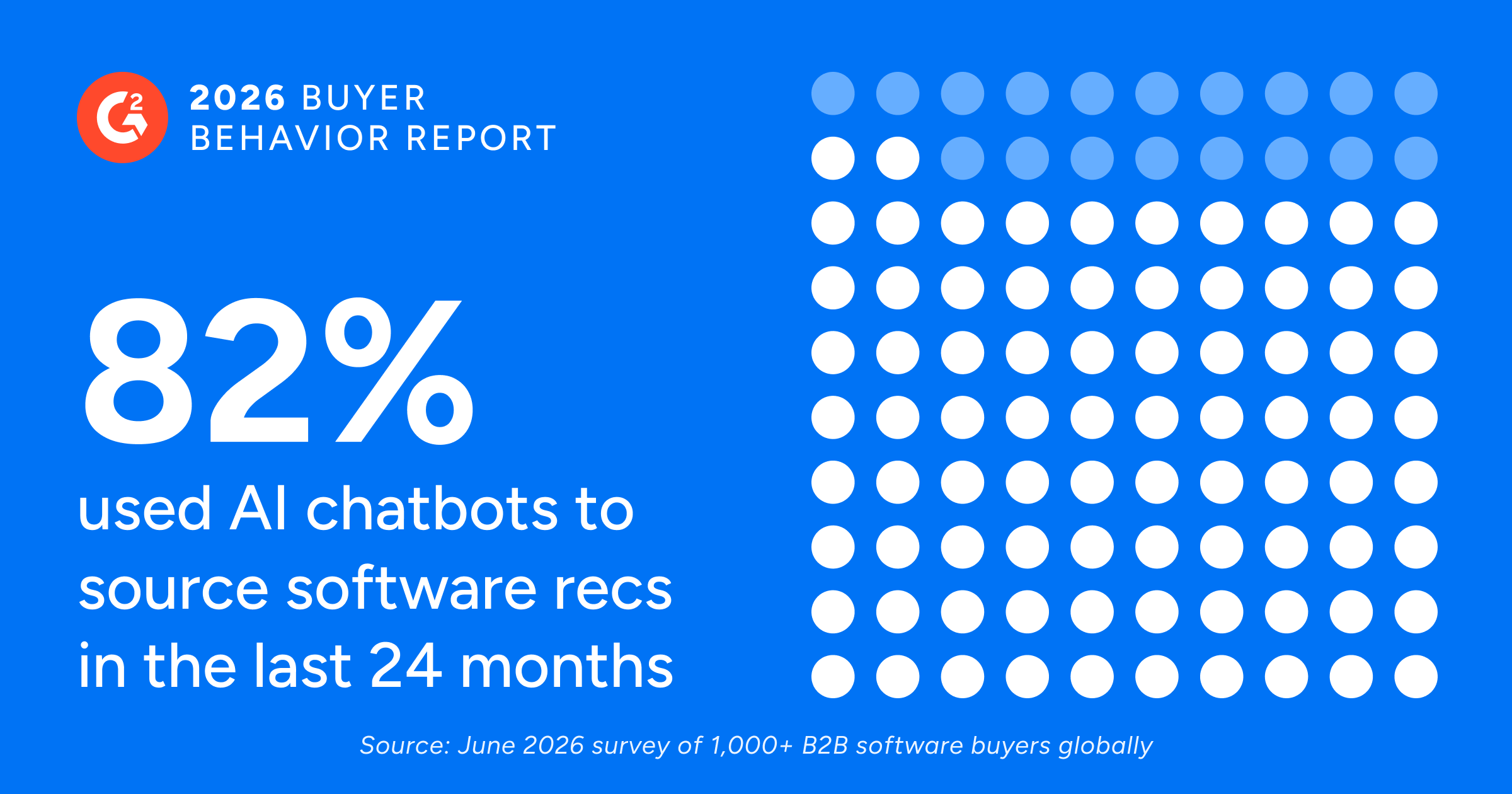
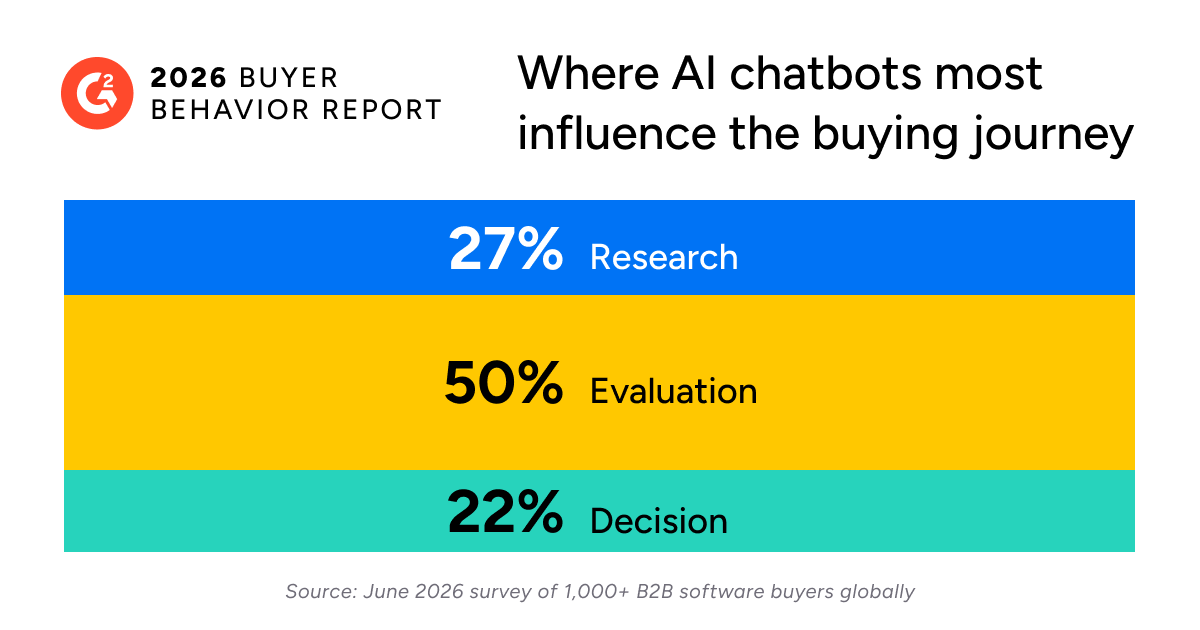
More than 80% of buyers sourced software recommendations from an AI chatbot in the last two years. Among those buyers, half say AI had the greatest influence during shortlisting and evaluation. That matters because once a buyer feels good about their options, they rarely change their minds. For software brands, the big question is whether AI includes you in the shortlist, represents you accurately, and gives buyers enough proof to keep you in the evaluation.

03

AI economics are breaking SaaS pricing.

Buyers now have to evaluate token usage, variable consumption, AI premiums, outcome-based pricing, and shorter contracts — all of which put pressure on the traditional SaaS model. 80% of buyers say their organization provides developers or technical teams with a dedicated token or large language model (LLM) usage budget, and nearly half have already been offered a variable-cost pricing option. Most buyers will pay a premium for AI when the value is clear, but they want to understand what they are paying for, how usage will be managed, and whether the pricing model makes the risk worth taking.

04

AI budgets have room to run,
but the CFO wants proof.

AI is still encouraging software spend, but it’s coming with more scrutiny. Half of buyers say AI increased their software budget over the past year, and 47% are reallocating more than 10% of their existing software budget to fund genAI projects. Yet, nearly half say their CFO vetoed an already-approved software purchase in the last year. As scrutiny of AI purchases increases, finance is both a sponsor and a skeptic, meaning software brands need to deliver clearer ROI, cleaner pricing, and stronger proof earlier in the evaluation process.

05

Agents are entering evaluation,
but humans still hold the decision.

Agents are entering the buying workflow, but trust has a hard ceiling. Nearly two-thirds of buyers cap agents at research or recommendations. They will allow agents to gather information and suggest vendors, but higher-stakes actions require a human in the loop. For now, agents are working in the background, but the shift to watch is when they move into initiating purchases, triggering renewals, and flagging cancellations. That transition has not happened yet, but the buying infrastructure is already being built around it.

Key
Findings

BBR-Chapter1-Mobile
01

Evaluation is now where
software deals are won & lost.

AI compressed discovery, but it did not compress decision-making. Buyers now get to a shortlist faster than ever, but evaluation is where things slow down. With more internal scrutiny than ever, their options are stress-tested as confidence builds.

Evaluation is
the new bottleneck.


Finding software used to be the hard part. But as AI chatbots have compressed the discovery phase from months to minutes, the friction has shifted downstream to evaluation.

Our research shows 40% of buyers now say evaluation is the longest stage in their buying journey — up from 36% last year. That means, for the first time, software buyers are spending more effort gathering proof, managing security reviews, and building internal alignment than canvassing the software landscape.

Once a buyer has a shortlist, IT security review is the single biggest source of delay (39%) between selecting a vendor and completing a purchase. Budget approval is next at 32%, followed by implementation planning at 25%. For enterprise buyers, the bottleneck is even sharper: 50% name IT security review as their top post-selection delay.

Buyers aren't stalling because they can't make a decision — they're navigating an organizational gauntlet that has only gotten more complex in the age of AI.

For the first time, software buyers are spending more effort gathering proof, managing security reviews, and building internal alignment than canvassing the software landscape.

For the first time, software buyers are spending more effort gathering proof, managing security reviews, and building internal alignment than canvassing the software landscape.

AI is getting harder
to sell internally.


AI is still a selling point for software buyers, but it is no longer enough without clear differentiation and value. Too much reliance on AI without the substance to back it up can actually undo deals. Buyers expect more than just a fancy AI label and a promise. They want transparency and control.

This shift is already visible in the broader market. DuckDuckGo traffic is booming after announcing a no-AI search experience, and Firefox recently allowed users to block generative AI features entirely. Buyers aren't walking away from AI, but they're increasingly asking for more say in how it shows up.

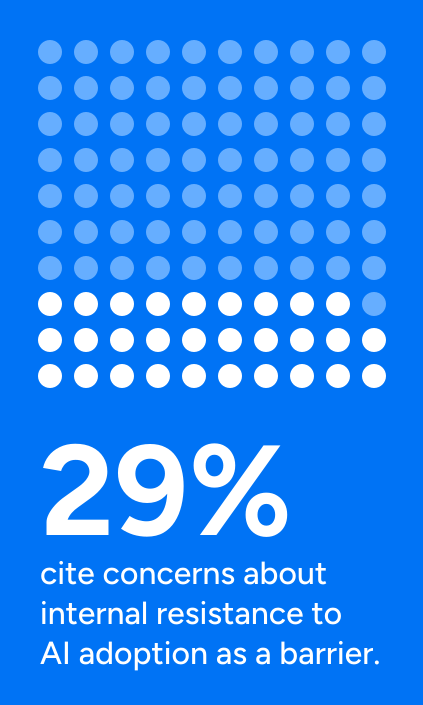
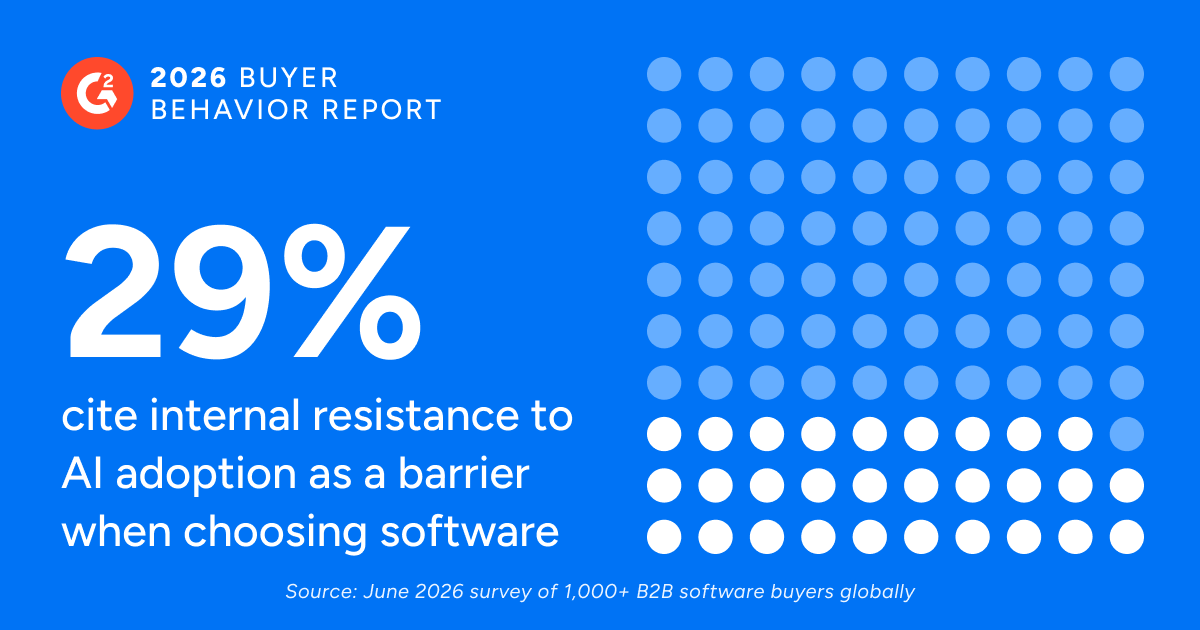
B2B software is not immune to this response: 72% of buyers we polled say AI is either a must-have or a differentiator when choosing software, but concerns about internal resistance to AI adoption grew from 16% to 29% in a single year — the largest single-year shift in the entire study. It’s not just financial stakeholders that buyers need to convince anymore. Champions increasingly must account for how the tool will be received and adopted by their colleagues as they make new AI software purchases.

Transparency is now more than a trust signal. It is ammunition for the internal sale. Eighty-seven percent of buyers say they are more likely to purchase from a vendor that offers transparent AI (explaining how data is used or how models are trained) than from a cheaper black-box competitor.

What it means
for software
brands

  • Evaluation is where you need to earn approval. Getting on the shortlist is table stakes, but getting approved is the job.
  • Security documentation is your closing tool, not a compliance checkbox. Arm your champion with it before they ask.
  • Don't make champions translate your AI story on their own. Give them plain-language materials they can use with security, legal, finance, leadership, and end users.
  • Lead with product benefits and performance, not the AI story. Champions can sell a faster workflow or a measurable cost reduction. They can't always sell a model.
  • Make transparency part of the sales motion, not a late-stage objection response. Buyers need to trust the AI before they can sell it internally.

“Trust must be easy to evaluate, or the deal stalls. Buyers aren't just asking, ‘Does this solve my problem?’ They're asking, ‘Will this survive the security review?’ That can no longer be treated as a checklist bolted onto the end of a procurement process. Trust must be evident on day one. It has to be built into how vendors educate, document, and support buyers from the very first evaluation.”


Stevie Case
CRO, Vanta
Stevie Case
BBR-Chapter2-Mobile
02

Shortlists form faster
and earlier with AI.

AI chatbots are serving up well-researched shortlists to software buyers earlier in their evaluation process — often before a buyer ever contacts a vendor. The window to shape consideration is shorter than ever, and once a buyer believes they have the right options, breaking in is difficult. Winning means getting on the list before buyers start looking, and increasingly, that means showing up in AI answers.

AI is building the shortlist.


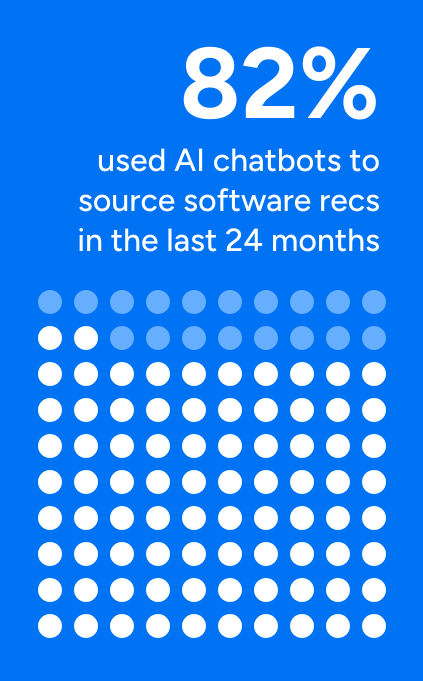
The shortlist is increasingly assembled by AI. Eight in ten buyers used AI chatbots to source software recommendations in the last 24 months, and for those buyers, nearly half said AI had its greatest influence during shortlisting and evaluation.

More telling, buyers who sourced software recommendations from AI chatbots were meaningfully more likely to buy from their initial shortlist — 80% did so in at least three of their last five purchases, compared to just 65% of those who didn’t.

When AI shapes the shortlist, brands that aren’t represented are eliminated before they realize the buyer was looking for them.  That means the brands that make the initial cut have a structural advantage in winning the deal.

When AI shapes the shortlist, brands that aren’t represented are eliminated before they realize the buyer was looking for them.

When AI shapes the shortlist, brands that aren’t represented are eliminated before they realize the buyer was looking for them.

Peer proof validates
the AI-built shortlist.


AI can build the shortlist, but buyers still want proof before they trust it. Software review sites are where they get that reassurance.

The top sources influencing buyer shortlist decisions are review sites (38%) and AI chatbots (37%). Buyers are using AI to accelerate the work of narrowing the field, but they still rely on peer proof to decide which brands deserve confidence.

That matches our observations about the value software reviews provide throughout the buyer journey. Our Answer Economy report showed that review sites are the only source, besides AI chatbots, that gains influence deeper into the funnel. Recent data from Growth Advisor Kevin Indig indicates that review platform citations in AI answers have risen 1.8x from 7% to 13% as buyers move from discovery into evaluation. The closer buyers get to a decision, the more they need evidence from people who have already used the product.

Reviews play a critical role in the software journey as both the starting point for AI chatbots and the trust layer for humans. AI gives buyers a faster path to the shortlist, and reviews give them a reason to believe the shortlist is right.

What it means for
software
brands

  • Winning the AI answer is a fast track to winning the shortlist and the deal. Instead of obsessing over AI citations, get creative to determine whether you’re included as a top option for buyers or winning 1:1 shootouts.
  • Win before the buyer raises their hand. If you are missing from AI answers, review sites, comparison pages, and peer conversations, the sales team may never get a clean chance to recover.
  • Structure your content for comparison. Clear positioning, pricing context, integrations, implementation details, alternatives pages, and use-case proof all help AI explain where you fit.
  • Move spend from top-of-funnel discovery to bottom-of-funnel evaluation channels. Google-sponsored search still has a role, but buyers are making final calls in places like review sites and Reddit.
  • Connect your answer engine optimization (AEO) and review strategies. The same proof that helps buyers trust you also helps AI explain why you belong on the list.
  • Build reviews around evaluation questions, not just star ratings. Buyers need proof around integrations, implementation speed, ROI, support quality, security confidence, and why customers chose you over a named alternative.

“AI is changing who gets considered. The first version of a buyer’s shortlist is increasingly being assembled by AI before that buyer ever lands on your site or talks to Sales. That means software vendors have to make their value legible everywhere AI is looking: accurate and detailed comparison content, third-party reviews, peer discussions, category content, docs, and proof of outcomes. If the model can’t understand why you belong in the shortlist, the buyer may never get the chance to either.”


Alex Halliday
CEO, AirOps
Alex Halliday
BBR-Chapter3-Mobile
03

AI economics are breaking
SaaS pricing.

The SaaS playbook was built on predictability: fixed seats, annual subscriptions, multi-year commitments. AI is making that harder to defend. While buyers still expect software spend to grow, AI has changed where that money comes from, how costs can scale, and whether today’s pricing model will still make sense six months from now.

AI spend is being
funded by tradeoffs.


Software budgets are still growing. Six in ten (62%) buyers expect their company’s software and technology spend to increase over the next 12 months, and 51% said it already has, due to AI. But that spend is not simply being layered on top of everything else.

Some is net new investment, but companies are also reallocating it from other tools and contracts to make up the difference. In the last year, 84% of buyers consolidated at least three best-of-breed tools into all-in-one platforms, and 50% consolidated at least five. Buyers are making room for LLM, token, and agent-related costs by downgrading, combining, or canceling existing contracts.

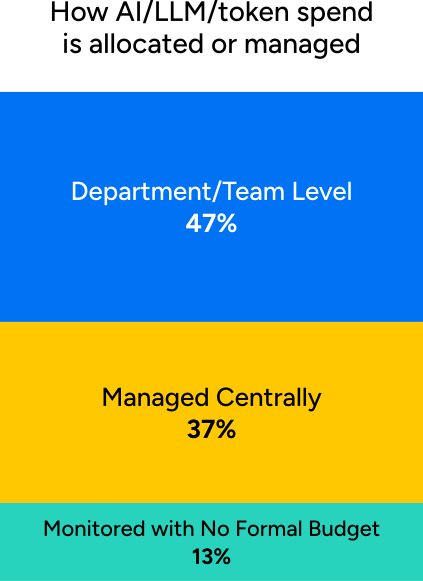
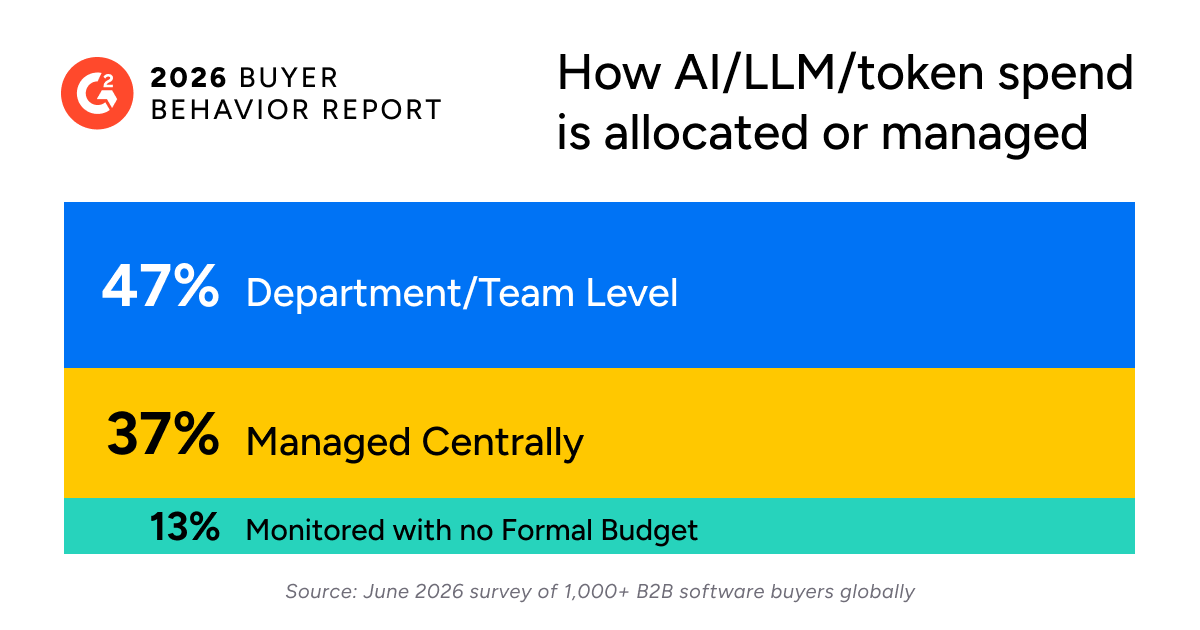
Tokens also make the tradeoff more visible. 80% of buyers now provide developers or technical teams with a token or LLM usage budget — a sign that AI costs are being budgeted and tracked like any other line item. But ownership varies: 37% manage token usage centrally, 47% manage it at the department or team level, and 13% monitor it without a formal budget at all.

Most buyers know AI costs matter. They are still figuring out who owns the spend — and what happens when usage scales.

In a market where software spend is booming, buyers are making room for LLM, token, and agent-related costs by downgrading, combining, or canceling existing contracts.

In a market where software spend is booming, buyers are making room for LLM, token, and agent-related costs by downgrading, combining, or canceling existing contracts.

Buyers want AI pricing tied to value, not uncertainty.


The cost of AI is forcing buyers to examine whether traditional SaaS pricing still makes sense. While traditional seat licenses and fixed subscriptions were built to control access, AI pricing is increasingly about usage, outcomes, and risk. 

Most buyers are already having that conversation with software providers, and 49% say a current vendor has offered them a variable-cost option (based on outcomes, consumption, or tokens) instead of a traditional seat license or subscription. Another 42% say they have been told those changes are coming.

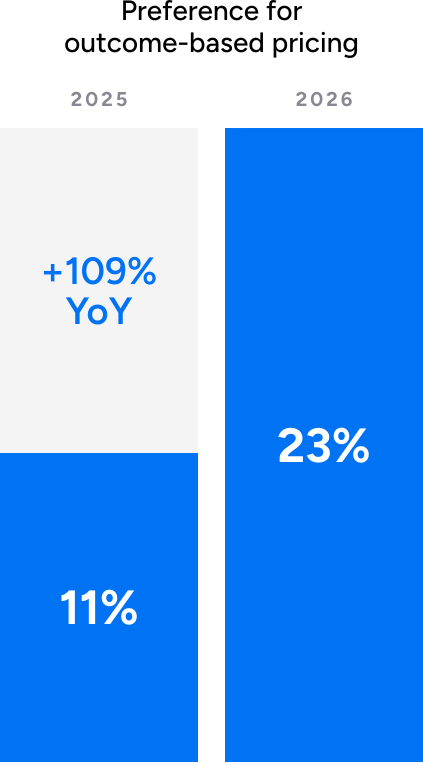
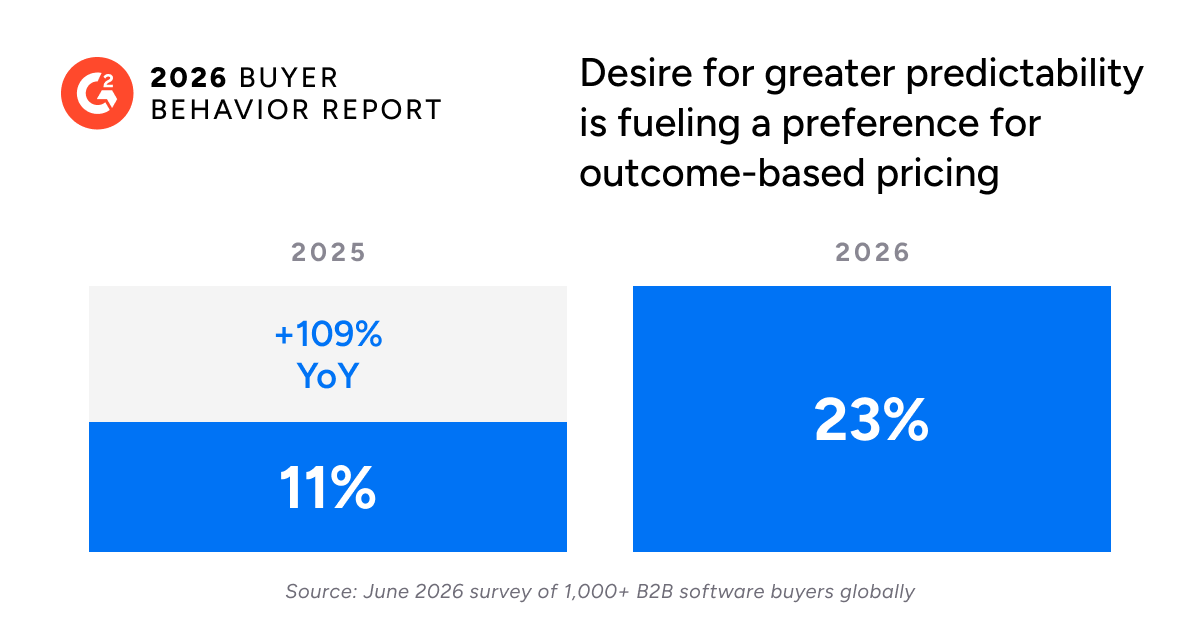
As finance teams contend with runaway AI spend and tokenmaxxing, buyers are rejecting pricing they cannot predict, defend, or connect to business value. Preference for outcome-based pricing more than doubled from 11% to 23% in a single year, and 52% of buyers said variable pricing improved their perception of a vendor. Among organizations with a dedicated token or LLM budget, 42% prefer outcome or usage-based software pricing.

Agents make that tension even sharper. If fewer people can produce more work, value no longer scales cleanly with headcount. Seats, subscriptions, and up-front fees become weaker proxies for what customers are actually buying.

Lead pricing conversations with value, not structure. Buyers are more open to new pricing models, but brands need to prove account-level value through workflows, usage, and outcomes.

As pricing shifts toward consumption and outcomes, average revenue per account (ARPA) is likely a better signal than annual recurring revenue (ARR) of whether customers are expanding value beyond the old subscription model.

What it means
for software brands

  • Find the source of the budget early. Ask what tools are being cut, downgraded, delayed, or consolidated to fund the purchase, then shape the business case around that tradeoff.
  • Sell into the consolidation decision, not around it. Show whether you replace point solutions, reduce total stack cost, or become too embedded in the workflow to remove.
  • Make token and usage growth feel controllable. Give buyers clear forecasts, caps, alerts, escalation rules, and ownership guidance before usage becomes a finance objection.
  • Lead pricing conversations with value, not structure. Buyers are more open to new pricing models, but vendors need to prove account-level value through workflows, usage, and outcomes.
  • As pricing shifts toward consumption and outcomes, average revenue per account (ARPA) is likely a better signal than annual recurring revenue (ARR) of whether customers are expanding value beyond the old subscription model.
BBR-Chapter4-Mobile
04

AI budgets have room to run, but the CFO wants proof.

The composition of the buying committee has shifted. Companies saw finance involvement in software decisions increase, not because CFOs started caring more about software, but because AI has changed the invoice.

Finance moved upstream and started reversing decisions downstream.

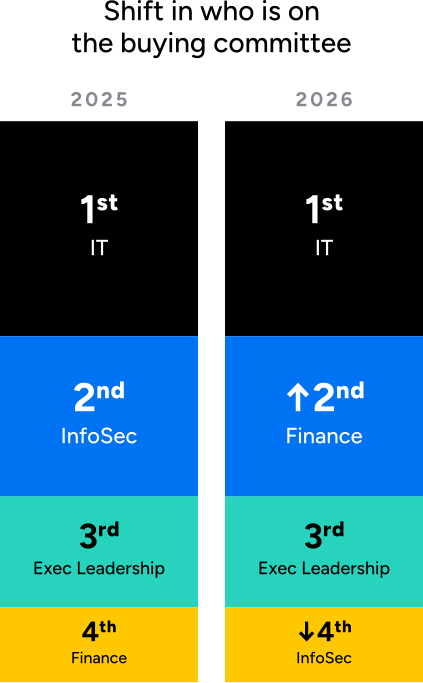
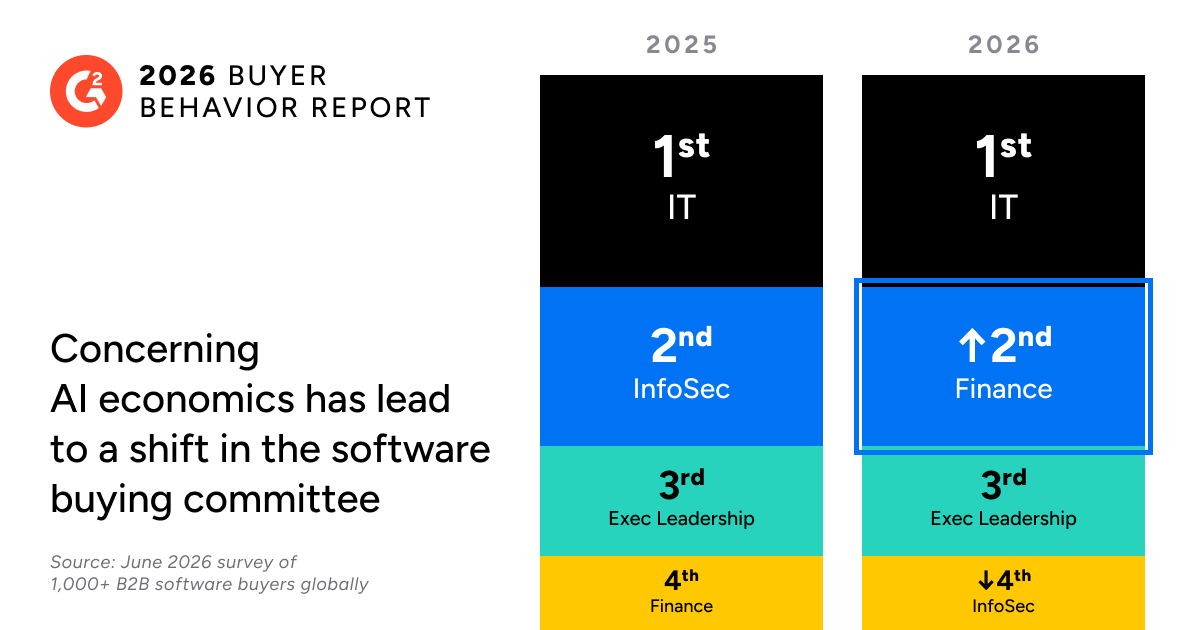
As the economics of AI become more concerning, the shape of the buying committee has begun to change. Finance involvement jumped from 31% to 46% in a single year, while information security, which is focused on technical risk rather than cost, fell from 32% to 25%. The gate on software buying has shifted from "is it safe?" to "is it worth the potential cost overruns?"

But, finance isn't taking a passive role in evaluation. Nearly half of the B2B software buyers we polled (49%) say their CFO reversed a deal the buying team had already approved in the last 12 months. Among companies with a dedicated token budget, CFO scrutiny is even higher. Fifty-four percent of organizations with a token budget said their CFO blocked an already-approved software purchase in the last year — nearly twice the rate of those without a spending bucket for LLMs and AI tokens (29%). 

That does not mean AI-mature companies are less willing to buy; stronger AI spending just creates more necessity for financial scrutiny.

However, the CFO is not only vetoing deals. In organizations where the CFO has blocked approved software purchases, they are also the biggest champion — ahead of department heads, IT leads, and operations roles. Finance is not anti-software; it is pro-value. When the case for buying is clear, the CFO can become one of the strongest sponsors in the room.

The gate on software buying has shifted from "is it safe?" to "is it worth the potential cost overruns?"

The gate on software buying has shifted from "is it safe?" to "is it worth the potential cost overruns?"

Buyers who have been through
a veto shop differently.

When a CFO vetoes a buying committee’s decision, it changes how the buyer approaches future purchases. Contract length preference is the biggest adjustment we’re seeing. 

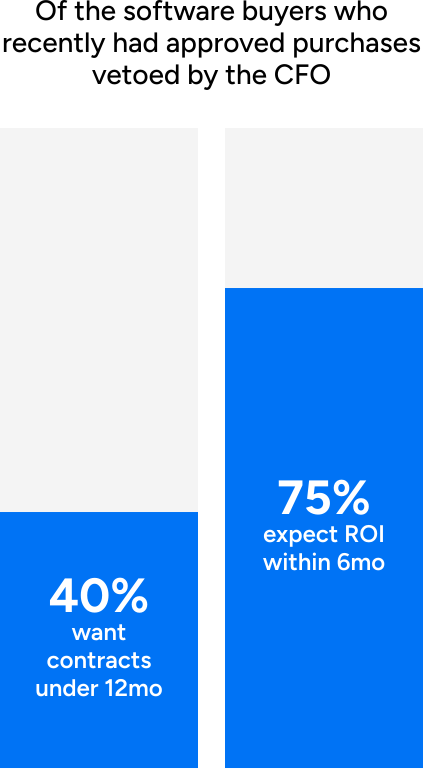
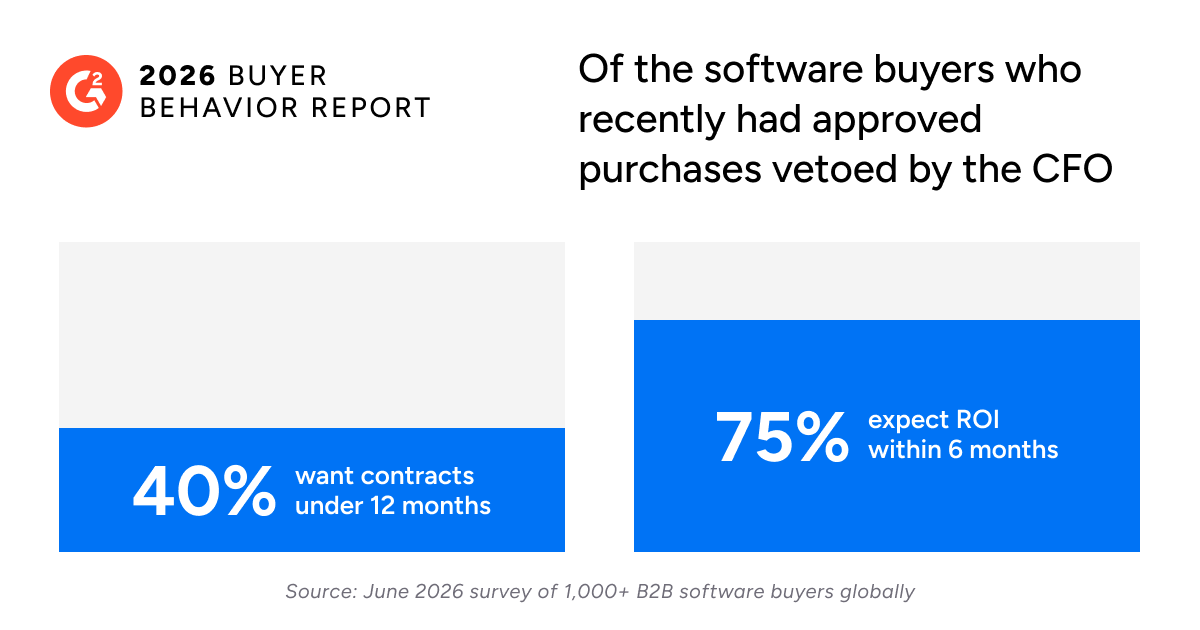
Globally, 70% of all B2B software buyers said the pace of AI innovation is pushing them toward shorter contracts, and 29% want terms under 12 months. Among those who have watched their CFO undo a deal, that preference is even stronger — 79% lean toward shorter terms and 40% strongly want contracts under 12 months. The need to control for both financial approval and evolving AI costs is hardening the way buyers negotiate.

They also want quicker returns. Three in four now expect a positive ROI within six months of signing a contract. Software brands that arrive with a real business case will find this group easier to close.

What it means
for software brands

  • Build for the CFO from the first conversation. Bring ROI models, multi-year total cost of ownership (TCO) scenarios, and a business case that survives a finance review.
  • Arm the champion with materials that finance will actually use. The person who picks you is rarely the only person who approves the spend. Give them proof they can forward upward: business case, customer outcomes, security and compliance documentation, pricing clarity, and the assumptions behind the ROI.
  • Lead with the proof that finance trusts. Veto buyers over-index on customer proof and third-party validation — the evidence that survives an ROI review.
  • No organization wants to sign up for a technology bill they can’t predict, so a big shift in the evaluation stage is now about vendors proving value rather than just communicating cost.
  • Demand for shorter contracts is going to increase as the pace of AI innovation accelerates. These buyers are already leaning toward commitments under 12 months, and offering flexibility upfront removes one of the main reasons finance pushes back.
  • Buyers who have been through a veto arrive at implementation needing to prove value fast — companies that articulate proof of ROI give champions what they need to protect the renewal.

“A champion can love the product and still watch the business case get shot down by finance. A successful finance review is when a thread from spend-to-outcome can be easily traced and understood — meaning, what it replaces, when it pays back, and the cost or risk of doing nothing. The deal isn't won when the user says yes. It's won when the buyer can defend the number.”


Alex Bradley
CFO, G2
Alex Bradley
BBR-Chapter5-Mobile
05

Agents are entering evaluation, but humans still hold the decision.

AI has already reshaped what buyers purchase and who signs off on it. The next shift is happening inside the buying process itself, where AI agents are entering software evaluation — but buyers aren’t handing over the autonomy to purchase without oversight. They’re putting agents to work on research, shortlisting, and comparison while keeping the decision locked to humans.

Agents are entering the buying workflow, but don’t yet have buying authority.

Over 60% of B2B buyers say they currently use or plan to use AI agents as part of the software buying process, and another 19% say they would use them for select use cases. And, why wouldn’t they? AI agents are a natural fit because the workflow plays to their strengths — structured, comparative, information-heavy tasks where the output can be verified. 

The clearest signal that agent presence is growing is where they are being deployed. The top use cases are all evaluation tasks, not autonomous purchasing: comparing TCO (51%), building shortlists of top vendors (51%), researching solutions (49%), and evaluating shortlisted vendors (46%). Buyers aren't testing agents at the edges of the process; they're applying them to the core work of evaluation.

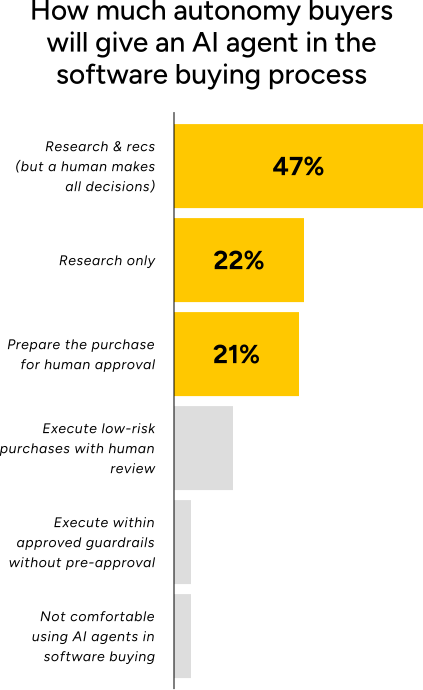
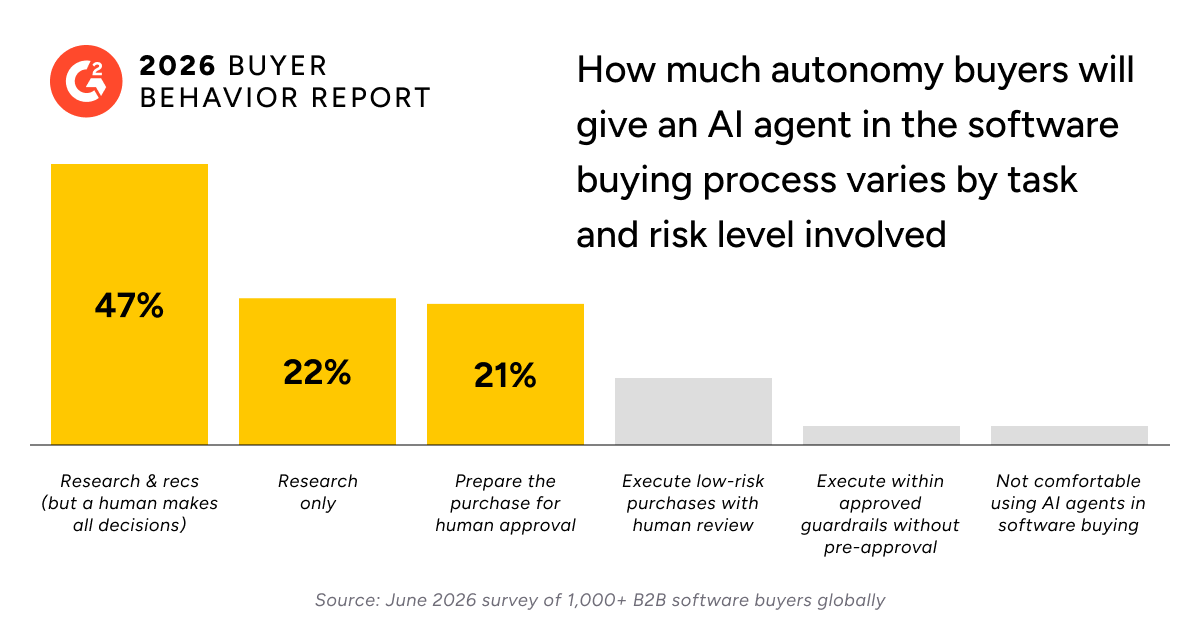
Agents are well-suited to handle that kind of repetitive comparison work, especially when the output can be reviewed before action. Buyers are comfortable giving agents work, but the trust gap still exists. Nearly half (47%) would let an agent conduct research and make recommendations while humans make all final decisions, and another 21% would limit agents to research only. Only 9% are comfortable letting agents execute purchases within approved guardrails, and just 2% would allow purchases without pre-approval.

Agents are already influencing software buying. Now, it will be interesting to watch how much more authority buyers give them as the trust gap narrows.

While buyers might ask an agent to assist with shortlisting, less than one third will let it run unsupervised.

While buyers might ask an agent to assist with shortlisting, less than one third will let it run unsupervised.

Agent authority depends on the harness around it.

An agent does not become useful in software buying because the LLM can reason. It becomes useful when the harness around it can provide the right context, connect to the right tools, enforce permissions, apply procurement rules, check the output, and route to a human when approval is required.

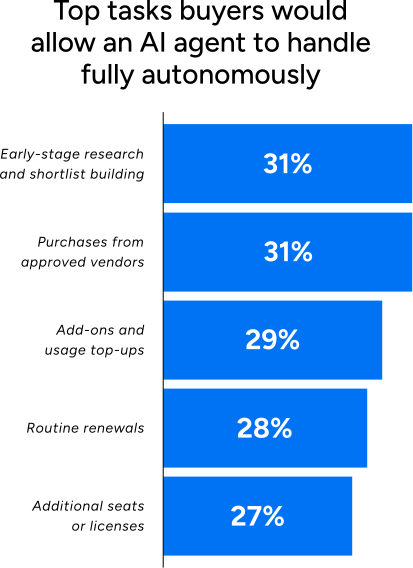
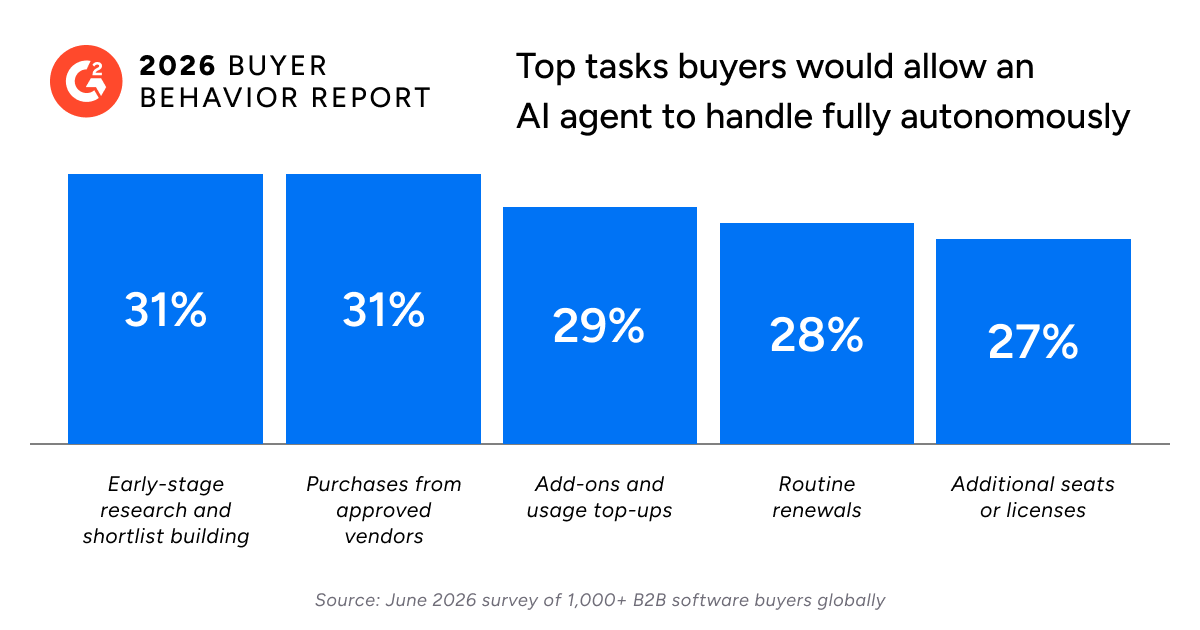
That is why buyers are most willing to let agents act on their own in workflows where the rules of engagement are already established. Asked what they would allow an agent to handle on their behalf, the top answers are all low-risk: early-stage research and shortlist building (31%), purchases from approved vendors (31%), add-ons and usage top-ups (29%), routine renewals (28%), and additional seats or licenses (27%).

So, while buyers might ask an agent to assist with shortlisting, less than one-third will let it run unsupervised. That illustrates the trust gap with agents — companies remain hesitant to grant them full autonomy. Their authority and adoption will continue to grow as innovation around the harness accelerates to better control the risk.

What it means
for software brands

  • Start preparing to sell to machines, even while humans still make the decision. This means ensuring access to structured, accurate, comparable information that agents can parse.
  • Build around the tasks agents are already being asked to perform. TCO breakdowns, implementation requirements, integrations, security posture, customer proof, and measurable outcomes need to be easy to find and easy to compare.
  • Build buyer trust by winning low-stakes agent motions. Renewals, add-ons, approved vendor lists, and limited procurement steps are areas where sellers can make it easy for agents.
  • Build for the harness. As agents move from evaluation to action, they will need structured inputs that buyer systems can understand: approved-vendor status, contract terms, pricing logic, implementation requirements, security documentation, renewal options, and expansion paths.
  • Treat machine-readiness as buying readiness. Software providers that are easy for agents to work with will be better positioned as agentic procurement expands. The goal is not just to be discoverable. It is to be actionable.

“The friction in handing work to an agent is both trust and collaboration, and it won't resolve as long as humans stay accountable for the outcome. Buyers need visibility into what it's optimizing for, clarity on how it decides, and explicit control over where the tradeoffs happen. Those who extend the most autonomy won't be trusting AI blindly. They'll be the ones who can read the reasoning before the agent commits, tune the weights, and know exactly where the handoff sits."


Alexis Zheng
Chief Product & Technology Officer, G2
Alexis Zheng
How go-to-market teams
are responding to buyer shifts
Using G2's AI Custom Research (AICR) solution, we interviewed 55 B2B marketers and GTM leaders globally about what's changed in how buyers behave — and what they're changing in response.
01

Everyone's reaching for the same playbook.

When asked what they'd changed in their marketing strategy over the last 12 months, a striking number of brands gave nearly the same answer: publishing more personalized content, account-based marketing, and interactive demos earlier in the funnel. However, few could point to what was actually lifting pipeline, which suggests a lot of motion that hasn't yet turned into an advantage.

02

Sales teams have stopped saving the good stuff for the demo.

The old sales motion held some details back from buyers to earn a demo or meeting. Now, software companies recognize buyers are already well-informed and need critical information earlier in their evaluation process. Many are offering up benefits, pricing logic, ROI calculators, case studies, and even trials right away to help arm buyers with the evidence they need to get a deal approved.

03

The fear of seeming behind on AI innovation
is shaping roadmaps and messaging.

Software brands are moving AI from the feature list to the front of their identity. One B2B marketer told us their entire company rebranded around AI, and another described being first-to-AI in a traditional category as "a ladder to stand on." But the urgency cuts both ways. At least one marketer admitted they'd "released too much too fast," overwhelming customers who couldn't absorb it.

04

Sales teams are spending more time
un-teaching things buyers “learned” from AI.

Some marketers we spoke with describe prospects arriving with comparisons and conclusions lifted from AI tools that are frequently category-level, dated, or inaccurate with regard to their product. Their new task is correcting these misconceptions without pushing the buyer away. It's slow, delicate work that GTM teams are battling more frequently as AI enters more phases of the buying journey.

05

Some companies are bucking the
AI trend and returning to IRL experiences.

As resistance to AI increases, some marketers feel their messages are being perceived as spam. So, a noticeable group is retreating to high-touch personal experiences to connect with customers and prospects — trade shows, booths, direct mail, and more. Their bet is that a human in the room is the one channel an algorithm can't flood.

"You still need to tell a good story, now you also need to make it verifiable: transparent pricing, proof they can inspect, material a champion can carry into a room you'll never be in. And treat answer engines as a channel you market to deliberately. If you're absent, the AI or your competitors will fill the gap without you."

 
Holly Chen
VP of Growth Marketing, Samsara
Holly Chan
What can software brands do to win?
Buyers don't need another pitch. They are already informed and already skeptical by the time they reach the evaluation stage. Software brands will earn the deal by showing up where buyers are looking and making the internal case for them. Here are three things teams can do to stand out.
01

Be easy to work with for both humans and agents.

Before a human is ever involved, buyers research, compare, and shortlist through AI — so make it easy for chatbots and agents to find you, understand what you do, and recommend you. And, arm your human champion with everything they need to navigate the internal evaluation gauntlet, which is more rigorous than ever, especially when AI is involved. Security documentation, ROI estimates, and a clear explanation of how your AI works will help satisfy everything buyers need to prove before a purchase.

02

Bring flexible pricing and a CFO-ready case to the table.

The economics of AI software are being rewritten, and finance is taking a more active role in the approval process. Expect buyers to ask for outcome-based pricing, flexible contract terms, and clear visibility into token usage as they evaluate your products. Avoid a last-minute CFO veto by showing up with pricing flexibility and a business case before you’re asked for it.

03

Remember, the evaluation never really ends.

Buyers now re-evaluate the vendors they've already chosen, and a better alternative is always one AI query away. Protect your renewals by placing your strongest humans at the evaluation and onboarding stages to ensure new customers have a positive, strong experience from day one.

Methodology

G2 fielded an online survey among 1,038 B2B decision-makers responsible for or influencing purchase decisions for departments, multiple departments, operating units, or entire businesses. Respondents had job titles ranging from individual contributor to manager, director, vice president, or higher.

To maximize differentiation for vendors, this survey defines small-medium business (SMB) as a company with 1-250 employees, mid-market as a company with 250-1,000 employees, enterprise as a company with 1,000-5,000 employees, and large enterprise as a company with 5,000+ employees. The survey was conducted in June 2026 and included a global pool of respondents across North America, EMEA, and APAC.

Qualitative research was also conducted through 55 interviews with B2B software marketers through G2’s AI Custom Research (AICR) solution. Generative AI reasoning models were used to define the study’s focus areas, optimize survey design, and analyze results to inspire writing and data visualizations.

About G2

G2 is the world’s largest and most trusted data source on B2B software, helping businesses reach their peak potential by enabling confident buying and go-to-market decisions. Offering trusted data, authentic peer reviews, and real-time market intelligence, the G2 ecosystem — which includes Capterra, Software Advice, and GetApp — serves more than 200 million annual buyers, representing teams at every Fortune 500 company.

As buyers increasingly shift from traditional search to AI search platforms, G2 has become the most-cited B2B software source across those AI-first channels where software discovery happens. Leading software and services companies like Salesforce, IBM, SAP, Adobe, and Clay also trust G2 to influence discovery, build brand credibility, reach in-market buyers, and accelerate revenue growth. To learn more, visit www.g2.com and follow us on LinkedIn.