



.png?width=32&height=32&name=Subtract%20(6).png)



Introduction from Tim Sanders
B2B software buyers have never had more credible software options at their fingertips and, at the same time, more obstacles to overcome in procuring the tools they need.
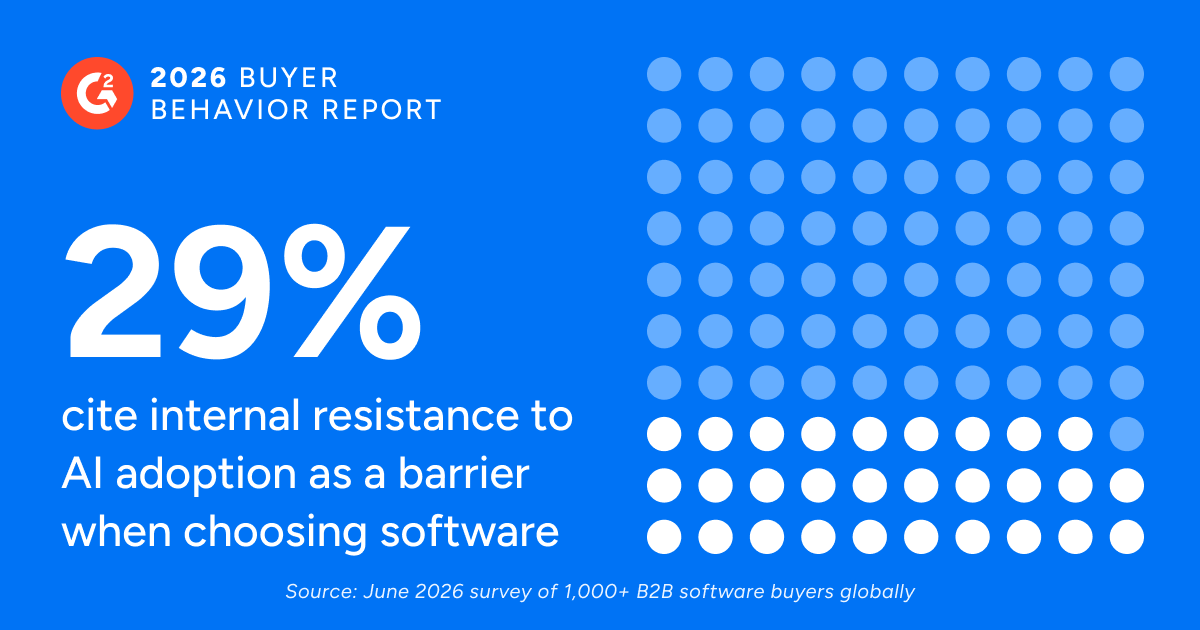
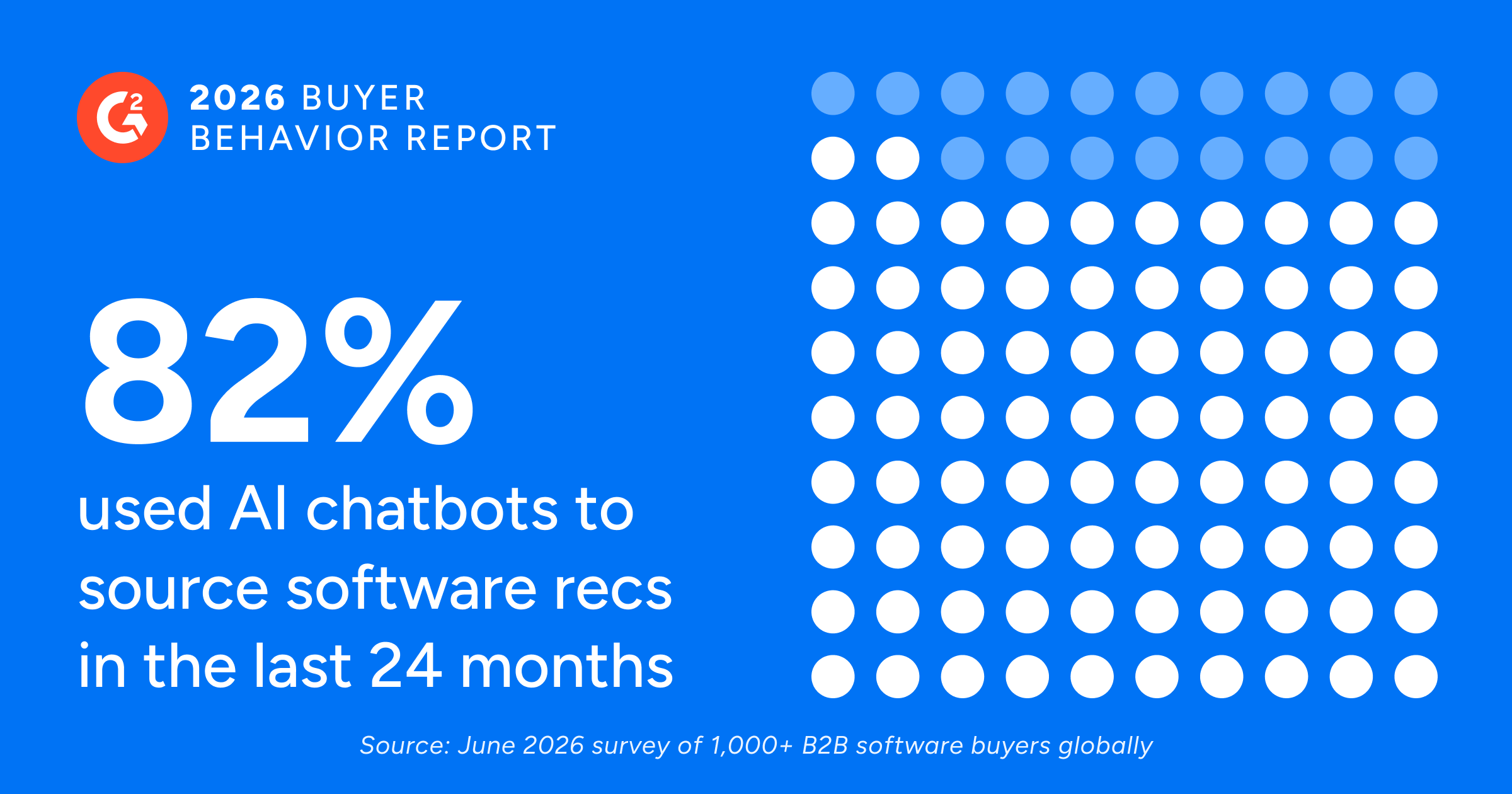
The discovery phase has compressed from hours of website browsing and report reviewing to a single prompt in an AI chatbot. In 2026, eight out of ten buyers employ AI search to be more efficient in buying. But they are soon met with a formidable challenge, trying to gain approval to purchase, likely created by AI’s growing narrative that it can be risky, expensive, and opaque.
In his book Reshuffle: What to do when AI restacks the knowledge economy, Sangeet Choudary observes, “Constraints aren’t simply eliminated from a system – they typically move to other parts of the system.”
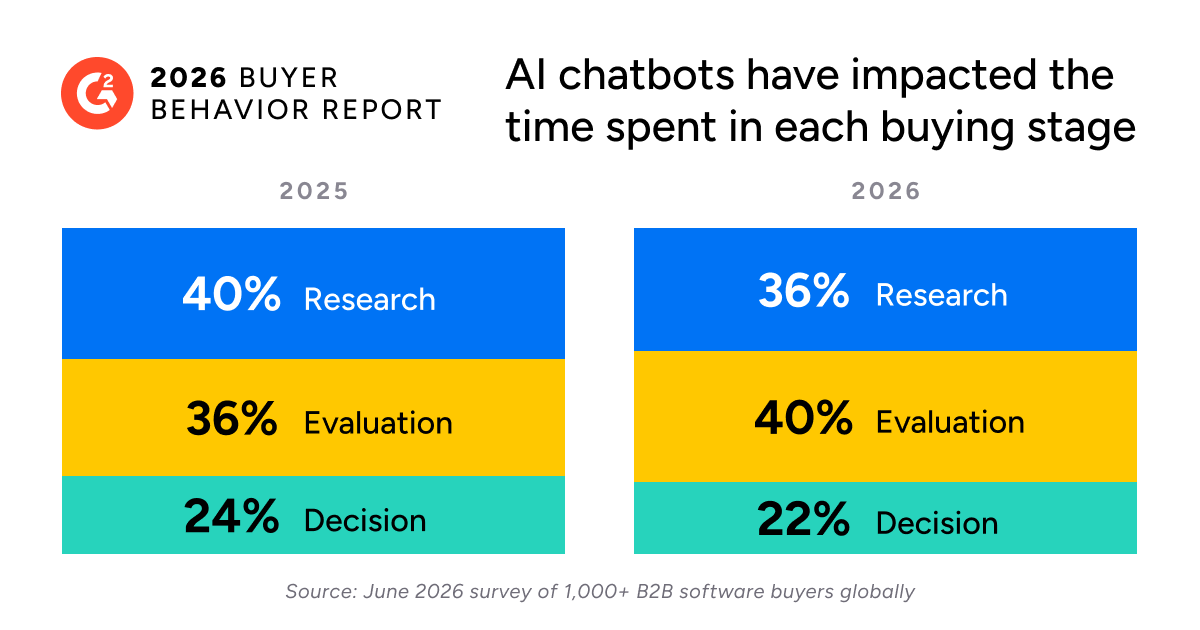
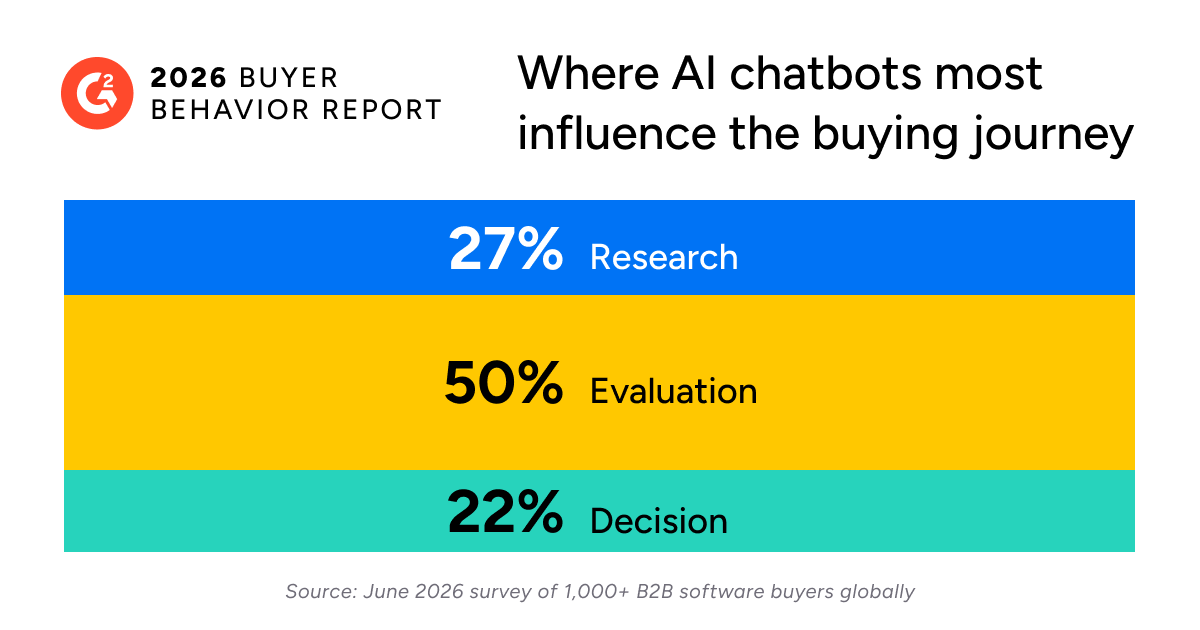
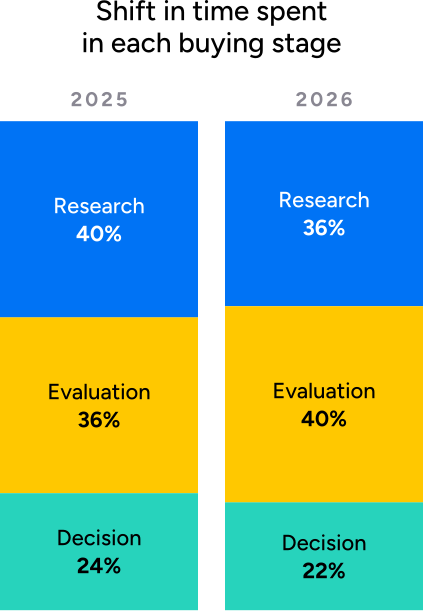
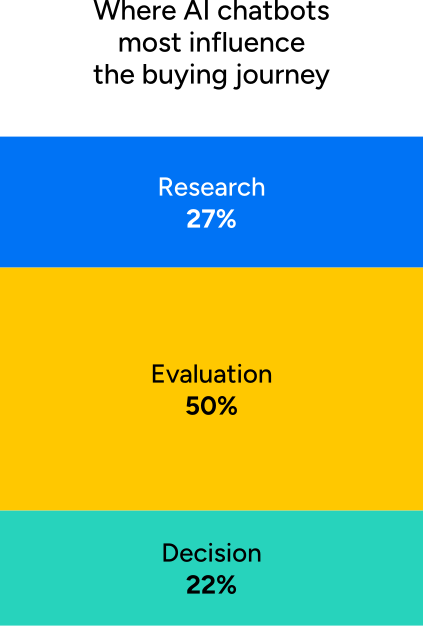
In other words, as AI solves one constraint, it creates a new one. Now that the scarcity of software recommendations has been solved, the evaluation stage of the journey is bumpier than ever. That is where buyers compare finalists, validate proof, scrutinize pricing, assess security, pressure-test implementation, and come to a decision whether to commit to the spend.
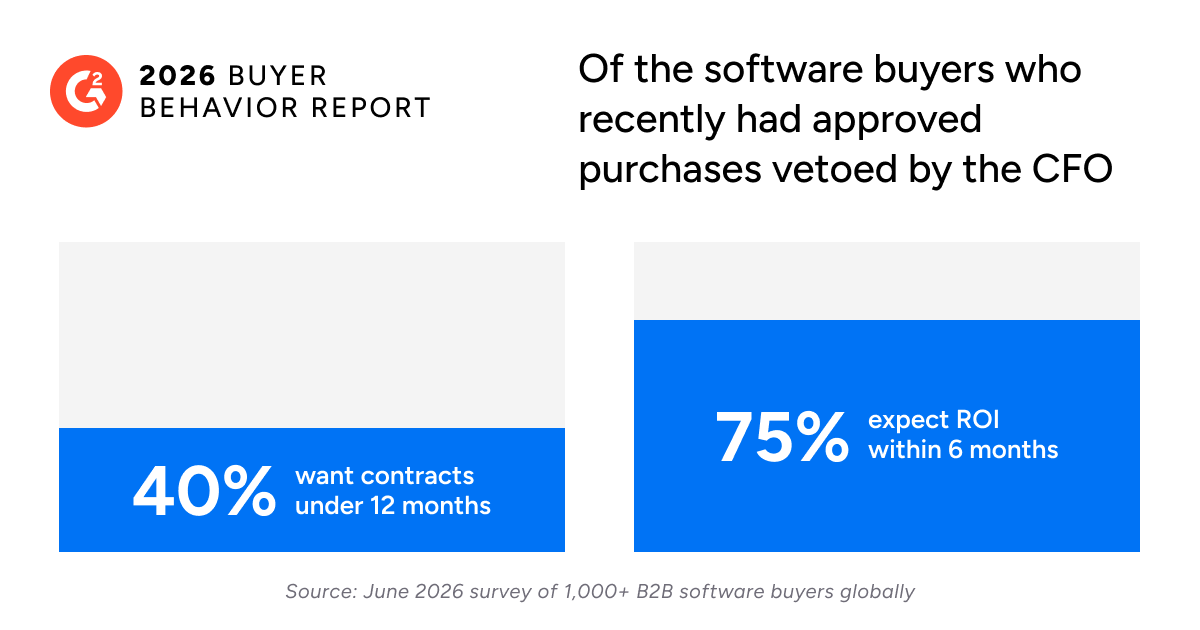
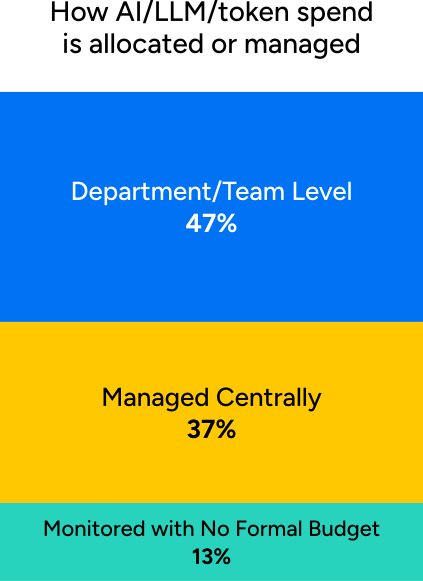
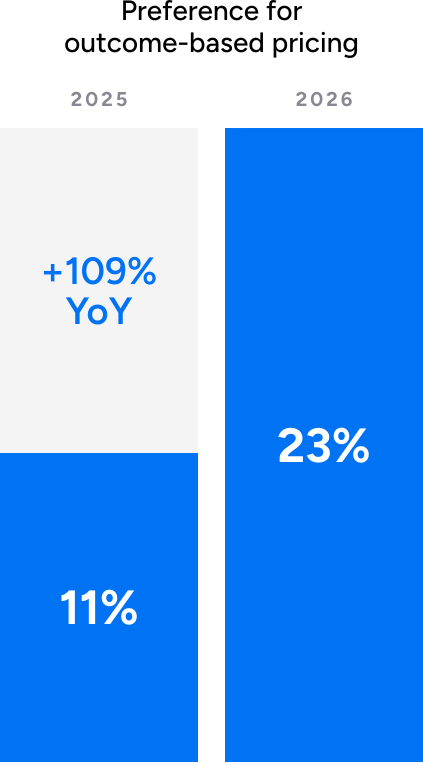
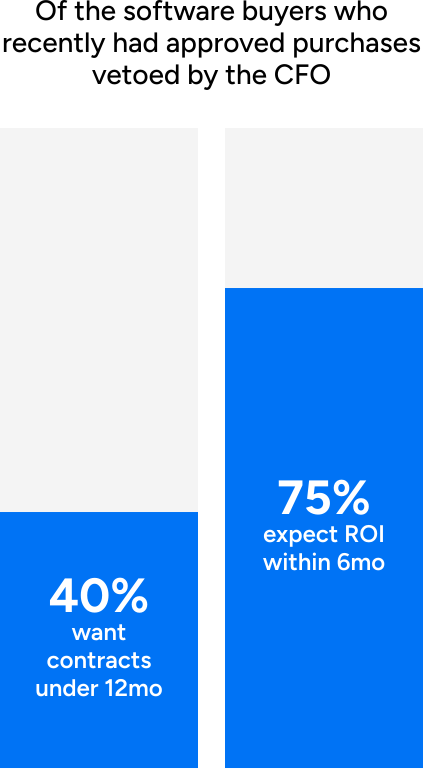
The most obvious signal of this change in buyer journey? Just follow the money. Nearly half of software buyers have had an approved software purchase vetoed by the CFO in the last year, and seven in ten buyers say the pace of AI innovation is pushing them toward shorter contracts. The question is no longer just whether a product works — it is whether the pricing model makes the risk worth taking.
Based on a survey of more than 1,000 B2B software buyers and decision-makers — paired with interviews from more than 50 B2B sales and marketing leaders — G2's 2026 Buyer Behavior Report tracks the new evaluation gauntlet buyers face after they’ve selected a software vendor. It covers everything from how shortlists are formed to where deals stall and what separates the vendors that win from those that don't.








.png?width=728&height=728&name=Frame%2027246%20(1).png)